
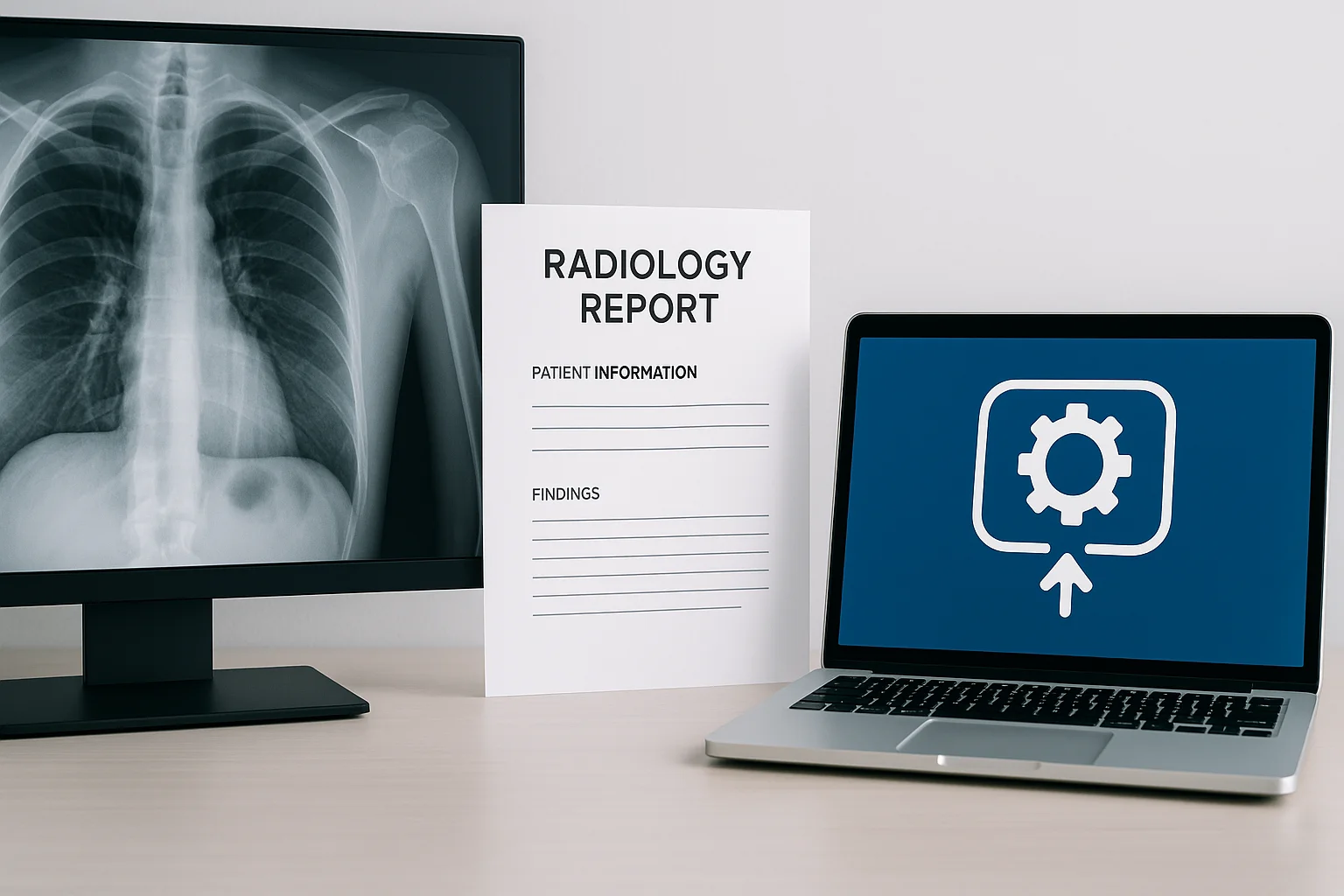
Report Automation: The New Era of the Digital Radiologist
Report automation: the new era of the digital radiologist
In the previous article, “Explainable AI: understanding how the algorithm thinks” , we reflected on the importance of understanding the decisions made by artificial intelligence systems in medical diagnosis. That principle —algorithmic transparency— is the foundation for another advance that is transforming the radiologist's day-to-day work: report automation.
Today, radiology is evolving not only in how images are interpreted, but also in how they are communicated. The radiology report, the final piece of the diagnostic process, is undergoing a quiet revolution that promises speed, consistency and a drastic reduction in administrative workload.
From manual transcription to the intelligent report
For decades, radiologists devoted a considerable part of their time to writing reports: describing findings, structuring conclusions, comparing previous studies and ensuring clinical clarity. A process that, although essential, consumes valuable hours. Today, thanks to artificial intelligence and natural language processing (NLP), that work is being automated.
The new systems generate draft reports from the images, highlight relevant findings and even propose preliminary conclusions based on patterns learned from millions of previous studies. The radiologist no longer starts from scratch: they review, adjust and validate.
How report automation works
The process combines three technological pillars:
- Machine learning: detects and classifies findings in the medical image.
- NLP (Natural Language Processing): turns findings into coherent medical text.
- Explainable AI: shows which parts of the image justify each sentence of the report.
The result is a report that is not only fast but also visually audited, allowing the radiologist to understand why the AI proposed certain concepts —continuing the line of the previous article on algorithmic transparency—.
Speed, consistency and safety
Automation delivers immediate benefits:
- Shorter reporting time: what used to take 10–15 minutes can be done in 2–3.
- Standardized language: eliminates subjective variations between professionals.
- Fewer human errors: prevents omissions in complex or lengthy studies.
- Greater traceability: each sentence can be linked to specific regions of the image.
Automation does not replace the radiologist: it empowers them. It lets them devote more time to in-depth interpretation and clinical dialogue with other specialists.
Structured reports: the new standard
Modern reports are not only automated, they are also structured. This means information is organized into clear sections: clinical indication, technique, findings, impressions and recommendations. AI systems automatically fill in these sections and make it easier to integrate them with PACS, RIS and the electronic health record.
In addition, these reports make it possible to carry out epidemiological analyses, quality studies and clinical audits with unprecedented precision.
The radiologist as a “digital supervisor”
In this new ecosystem, the radiologist's role evolves. They go from being a report writer to a curator of medical knowledge. They validate what the AI proposes, adjust the clinical language, add context and use their expert judgment to make critical decisions.
Automation gives them back time for something no machine can offer: human clinical reasoning, professional intuition and connection with the patient.
Ethical and adoption challenges
Automating reports requires a solid framework:
- Explainable AI to avoid diagnoses without a visible basis.
- Data security to protect sensitive information.
- Ongoing clinical validation to avoid algorithmic bias or errors.
But progress is inevitable: digital radiology is growing faster than ever, and automation is the natural next step to ensure better outcomes with less work overload.
Conclusion
Report automation marks the beginning of a new era for the digital radiologist. An era in which AI does not replace but accompanies; in which the report is not a burden but an intelligent tool; and in which the radiologist becomes the guardian of quality, precision and humanity in diagnosis.
← Previous: Explainable AI: understanding how the algorithm thinks
Related Articles
Keep exploring similar content.
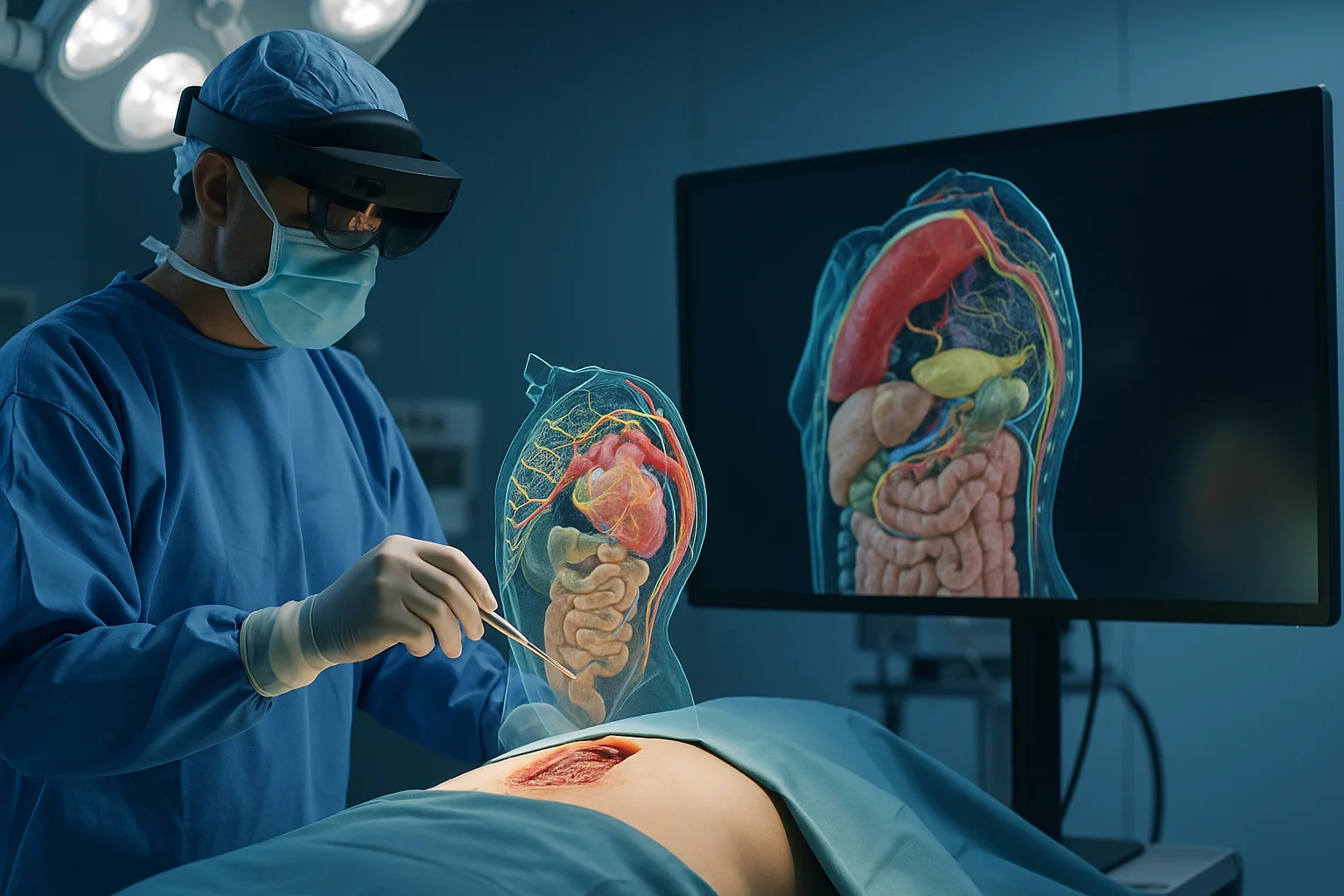
Augmented Reality and 3D in Surgical Procedures
Augmented reality and 3D modeling are transforming how surgical procedures are planned, performed and taught, giving surgeons a digital window into the patient's anatomy.
Data Security in Digital Radiology
Digital radiology handles sensitive images, predictive models and valuable clinical data. Protecting this information is essential to ensure safe diagnoses, patient trust and operational continuity.
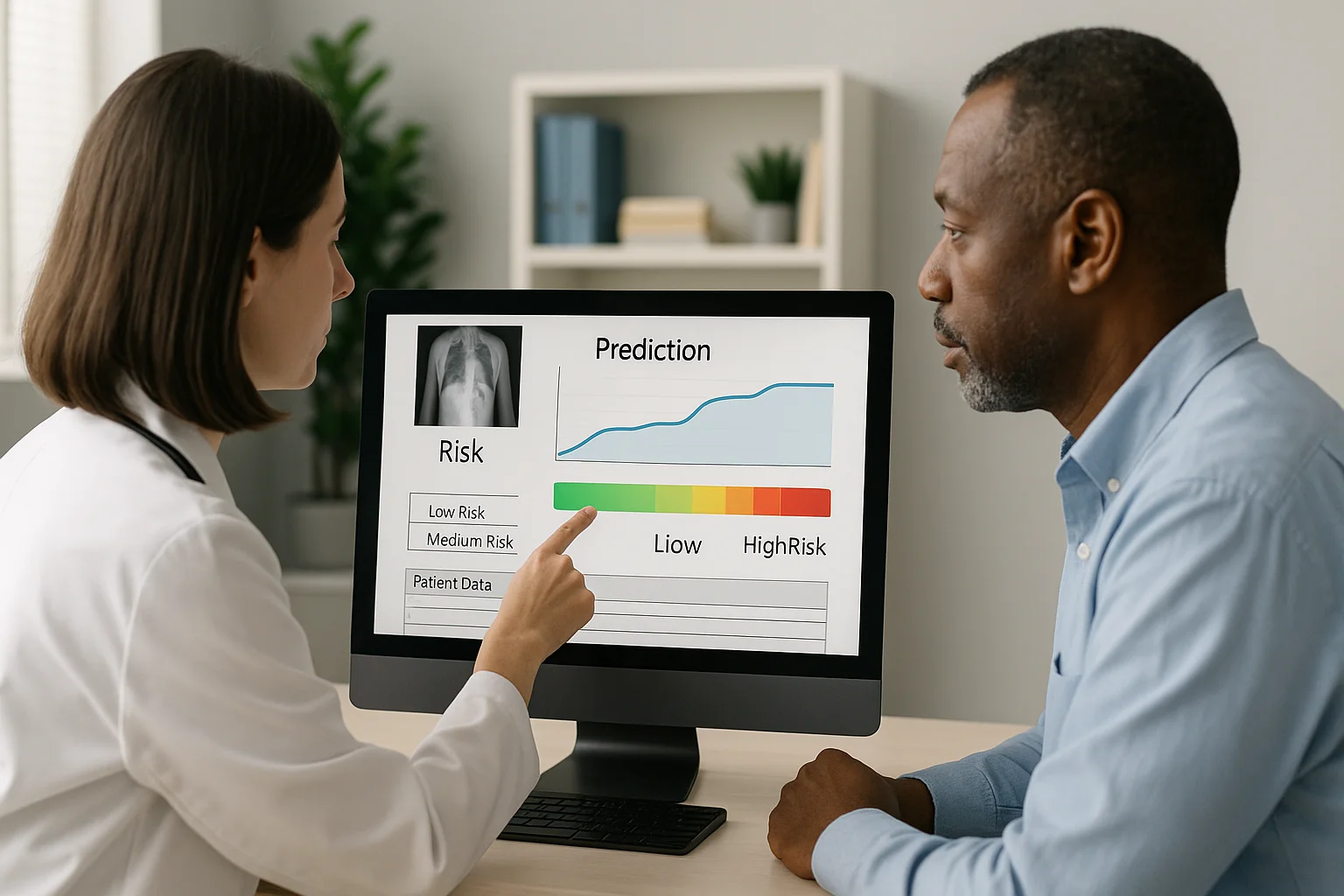
Image-Based Predictions: Medicine That Stays One Step Ahead
Thanks to artificial intelligence, medical images no longer just show what is happening, but what could happen. Predictive medicine turns every study into a tool to anticipate risks and save lives ahead of time.