
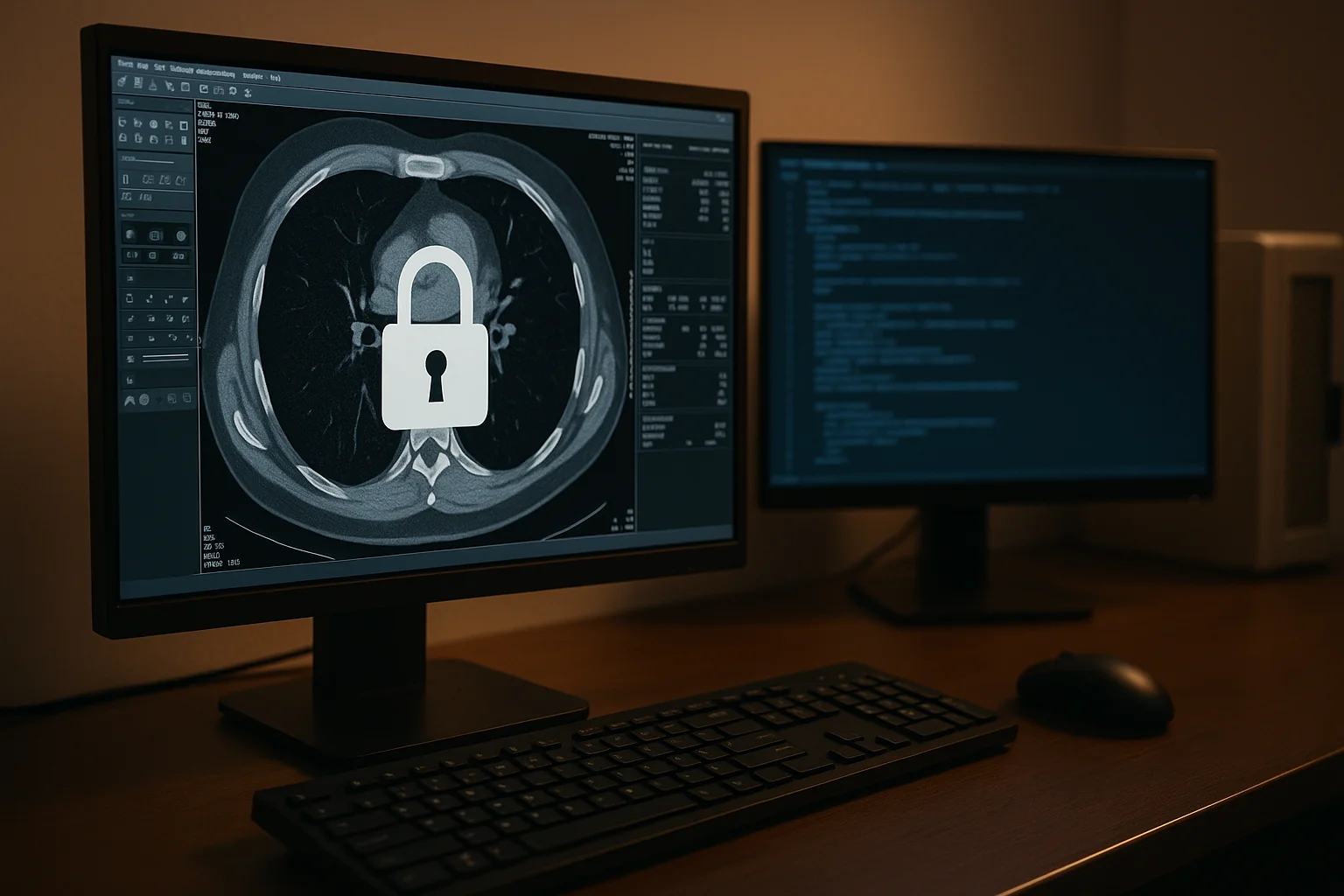
Data Security in Digital Radiology
Data security in digital radiology: protecting the heart of modern diagnosis
In the previous article, “Image-based predictions: medicine that stays one step ahead” , we explored how medical images, combined with clinical data and predictive models, make it possible to anticipate the future of a patient's health. But all that power has a weak point: security. The smarter radiology becomes, the greater the responsibility to protect every piece of data that makes it possible.
Because if prediction is the engine of the future, security is the shield that keeps it safe.
Digital radiology: a treasure for medicine… and for attackers
Modern radiology generates an immense amount of information: high-resolution images, metadata, reports, associated records and, now, AI models that learn from clinical behavior. This whole set —called the digital radiology ecosystem— is one of the most valuable within a hospital.
For cybercriminals, it is also one of the most attractive. Images, diagnoses and personal data have become a high-value target for ransomware, medical espionage and identity theft.
The question is no longer “whether they will attack”, but “when… and whether we will be prepared”.
Common vulnerabilities in PACS, RIS and digital workflows
The systems that support radiology —PACS, RIS, workstations, web viewers— are exposed to multiple threats:
- Unauthorized access due to weak or shared credentials.
- Attacks on PACS servers that store millions of images.
- Interception of unencrypted DICOM traffic.
- Image manipulation (“image tampering”) to alter diagnoses.
- Ransomware that locks critical studies.
- Leaks through external devices (USB drives, mobile phones, unsecured workstations).
Digitization made radiology faster, but it also opened a door that we must reinforce.
Secure DICOM: the new standard
The traditional DICOM protocol was designed to work inside closed hospital environments. Today, with the cloud, telemedicine and interoperability, that scenario has changed. That is why DICOMweb + TLS encryption was born, a standard that protects communications between systems.
Its advantages include:
- End-to-end encryption of images and metadata.
- Strong authentication for every device or user.
- Full traceability of who accesses each study.
A secure image is as important as a clear image.
Cloud cybersecurity: an ally, not an enemy
Many radiology centers are migrating their PACS to the cloud to gain speed, availability and scalability. But the classic fear arises: are my images really secure?
The answer is yes, if implemented correctly:
- AES-256 encryption at rest.
- Digitally signed access certificates.
- Virtual private networks (VPN) or Zero Trust tunnels.
- Automatic backups in independent regions.
The cloud does not weaken radiology: it strengthens it. But only if it is configured rigorously.
Secure AI: protecting predictive models
In the previous article we saw how images can generate risk predictions. Those models —trained on thousands or millions of studies— must also be protected. If an attacker manipulates an algorithm, they could:
- alter diagnoses,
- erase important patterns,
- or sabotage screening protocols.
That is why practices such as these are applied:
- Continuous validation of predictive models.
- Explainable AI to detect abnormal behavior.
- Version control and auditing of every model.
Security is not only about data: it is also about intelligence.
Patient protection: privacy as a principle
Radiology is at the center of the medical record. A study reveals much more than an image: age, gender, conditions, progression, treatments, lifestyles… That is why privacy must be a pillar.
Good practices include:
- DICOM anonymization before sharing studies.
- Granular permission control.
- Minimum-access policies (Least Privilege).
- Ongoing training for radiologists and technicians.
Patients should feel that their information is as well protected as their health.
Conclusion
Data security in digital radiology is no longer an add-on: it is an essential requirement. Every image, every prediction, every report and every AI model depends on a secure, robust and reliable infrastructure. In an ecosystem where radiology becomes smarter every day, protecting it is an ethical, technical and human duty.
← Previous: Image-based predictions: medicine that stays one step ahead
Related Articles
Keep exploring similar content.
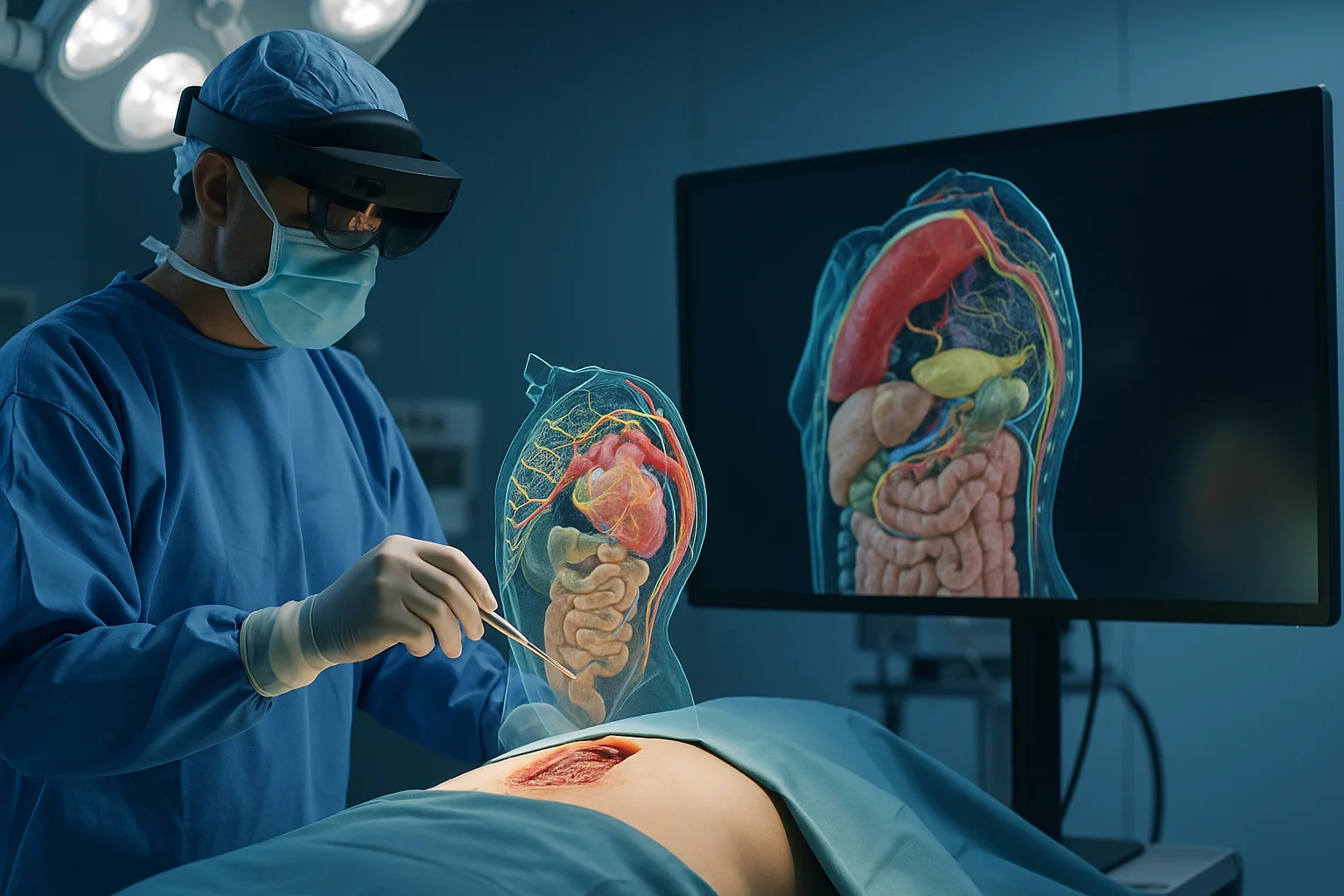
Augmented Reality and 3D in Surgical Procedures
Augmented reality and 3D modeling are transforming how surgical procedures are planned, performed and taught, giving surgeons a digital window into the patient's anatomy.
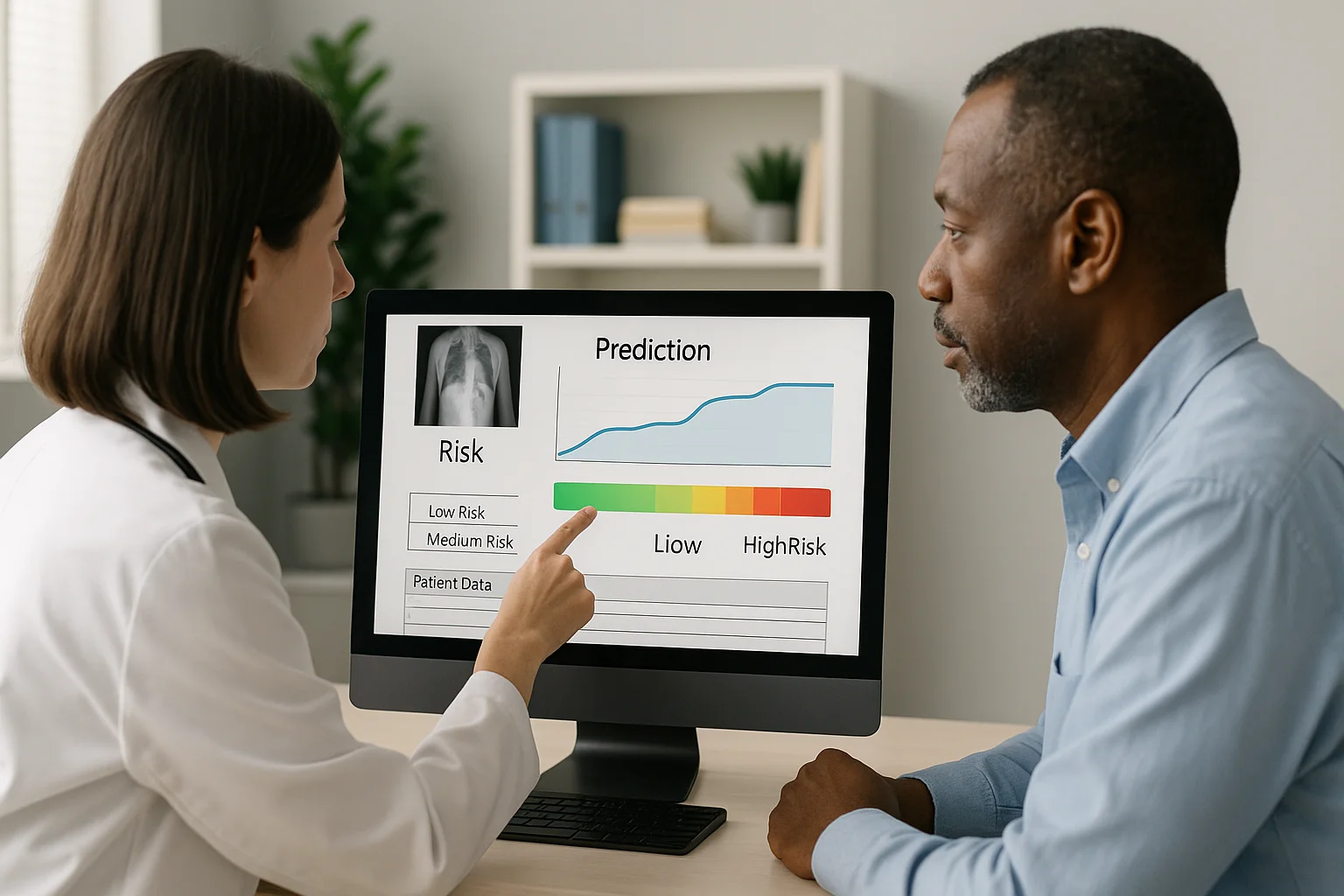
Image-Based Predictions: Medicine That Stays One Step Ahead
Thanks to artificial intelligence, medical images no longer just show what is happening, but what could happen. Predictive medicine turns every study into a tool to anticipate risks and save lives ahead of time.
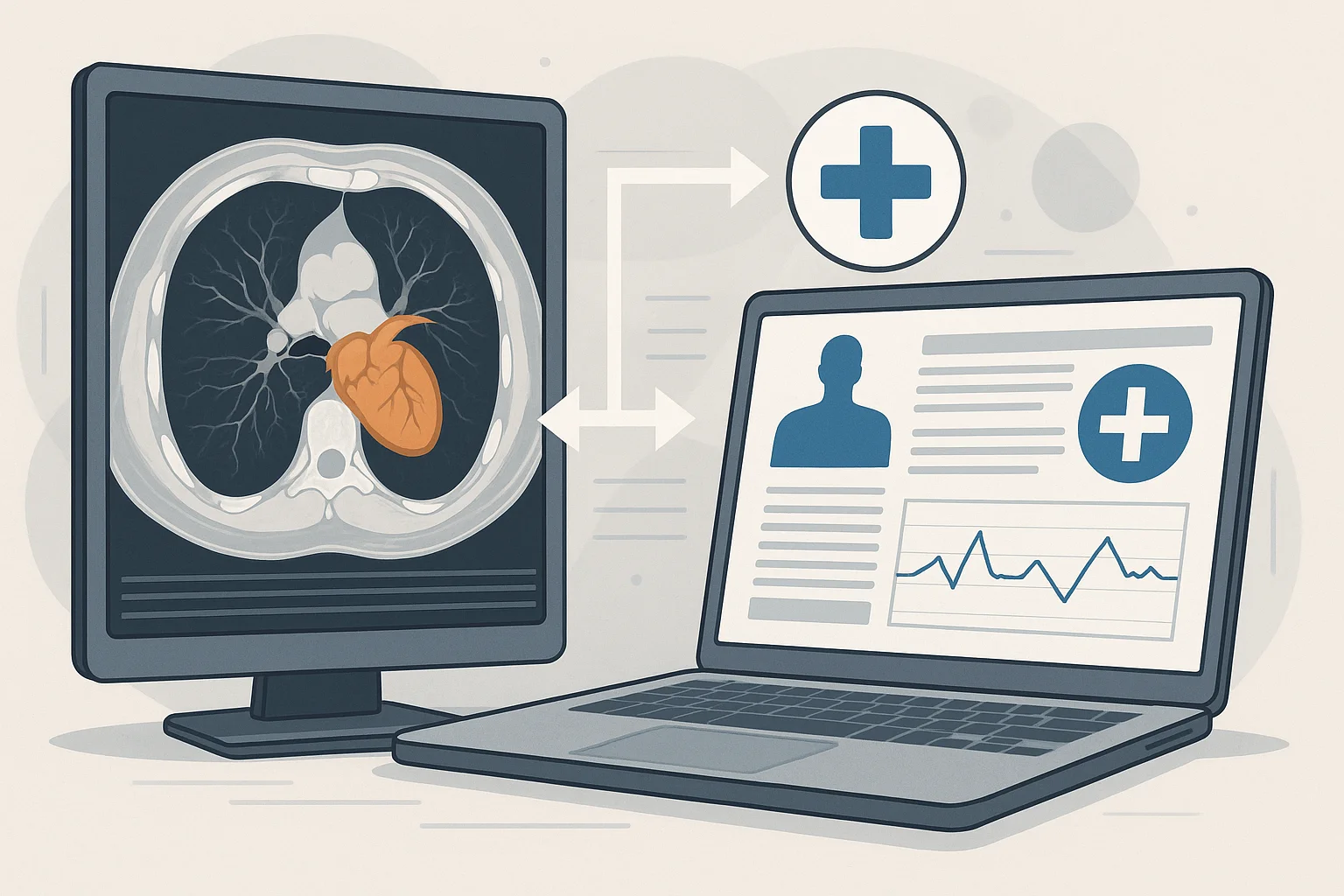
Fusing Imaging and Clinical Data: Integrated Diagnosis
Combining medical images with clinical, genomic and lifestyle data produces more complete and personalized diagnoses, turning precision medicine into a reality.