
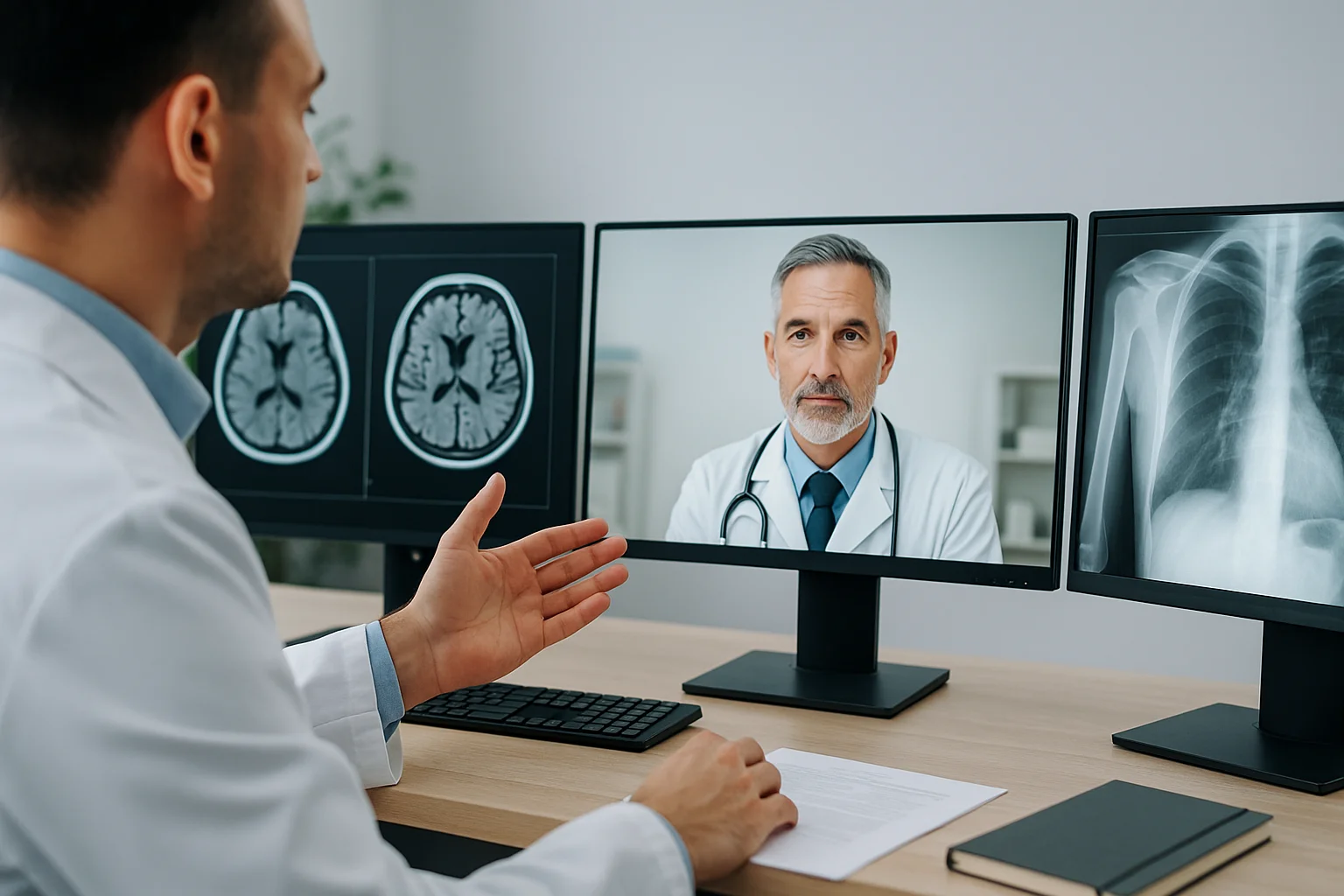
Remote Radiology: Collaborative Diagnoses Without Borders
Remote radiology: collaborative diagnoses without borders
In the previous article, “Automatic tumor detection: algorithms that see the invisible”, we explored how artificial intelligence is revolutionizing diagnostic imaging by detecting lesions imperceptible to the human eye. But that progress does not happen in isolation. Technology is also connecting professionals across the globe in a network without geographical limits: remote radiology.
From the local hospital to global diagnosis
For much of the 20th century, radiology was a local practice. Images were analyzed in the same hospital where they were taken, and results depended on the availability of on-site specialists. However, with the arrival of digitization, PACS and high-speed networks, radiology broke through its physical walls. Today, an image taken in Lima can be interpreted by a radiologist in Barcelona or Tokyo within minutes.
This is how teleradiology was born, a discipline that leverages connectivity and secure information-exchange systems to provide remote diagnoses. What used to be a bottleneck is now a global network of shared knowledge.
Remote radiology in action
In modern hospitals, images generated by CT scans, MRIs or X-rays are automatically uploaded to secure cloud platforms. From there, certified specialists can access them, analyze them and produce clinical reports in real time. The process is fast, secure and traceable thanks to integration with systems such as PACS, RIS and, increasingly, artificial intelligence tools.
Remote radiology is especially valuable in regions where radiologists are scarce or where health services must cover large territories. Thanks to it, an urgent diagnosis no longer depends on where the patient is, but on the ability to connect.
Collaboration without borders
One of the greatest benefits of remote radiology is the creation of international collaborative diagnosis teams. Physicians from different specialties can review the same study simultaneously, discuss findings and reach joint conclusions. This not only improves accuracy, it also raises the quality of medical learning and strengthens global research.
In addition, incorporating artificial intelligence into this environment acts as an assistant that prioritizes urgent cases, suggests diagnoses and compares studies with global databases. Each analyzed image feeds the next, creating a virtuous circle of continuous improvement.
Security, ethics and confidentiality
The expansion of remote radiology brings a major challenge: protecting patient privacy. Teleradiology platforms must comply with international standards such as HIPAA, GDPR or ISO 27001, ensuring that data is transmitted encrypted and that only authorized professionals can access it.
At the same time, digital informed consent and transparency in the use of data are ethical pillars of this new model. Because although images travel around the world, trust remains local and personal.
The impact on medical care
Thanks to remote radiology:
- Diagnoses are faster and more accessible.
- Patients in rural or low-resource areas receive the same quality of care as in a large hospital.
- Radiologists can specialize in specific areas and collaborate globally on complex cases.
- Resources are optimized, costs are reduced and continuity of care is improved.
Radiology stops being a local service and becomes a worldwide network of shared care.
Toward intelligent, global radiology
The future points to full integration: AI + connectivity + human collaboration. Tomorrow's hospitals will not compete with each other; instead, they will be part of a global ecosystem where every image, every diagnosis and every decision is shared for the benefit of humanity.
Remote radiology is not just a technological evolution; it is a human revolution that redefines the concept of distance in medicine.
Conclusion
Remote radiology is proof that medical knowledge has no borders. It allows science to travel faster than disease and connects patients around the world to the best specialists, no matter where they live. In this new scenario, medicine is driven not by geography but by collaboration.
← Previous: Automatic tumor detection: algorithms that see the invisible
Next: Explainable AI: understanding how the algorithm thinks →
Related Articles
Keep exploring similar content.
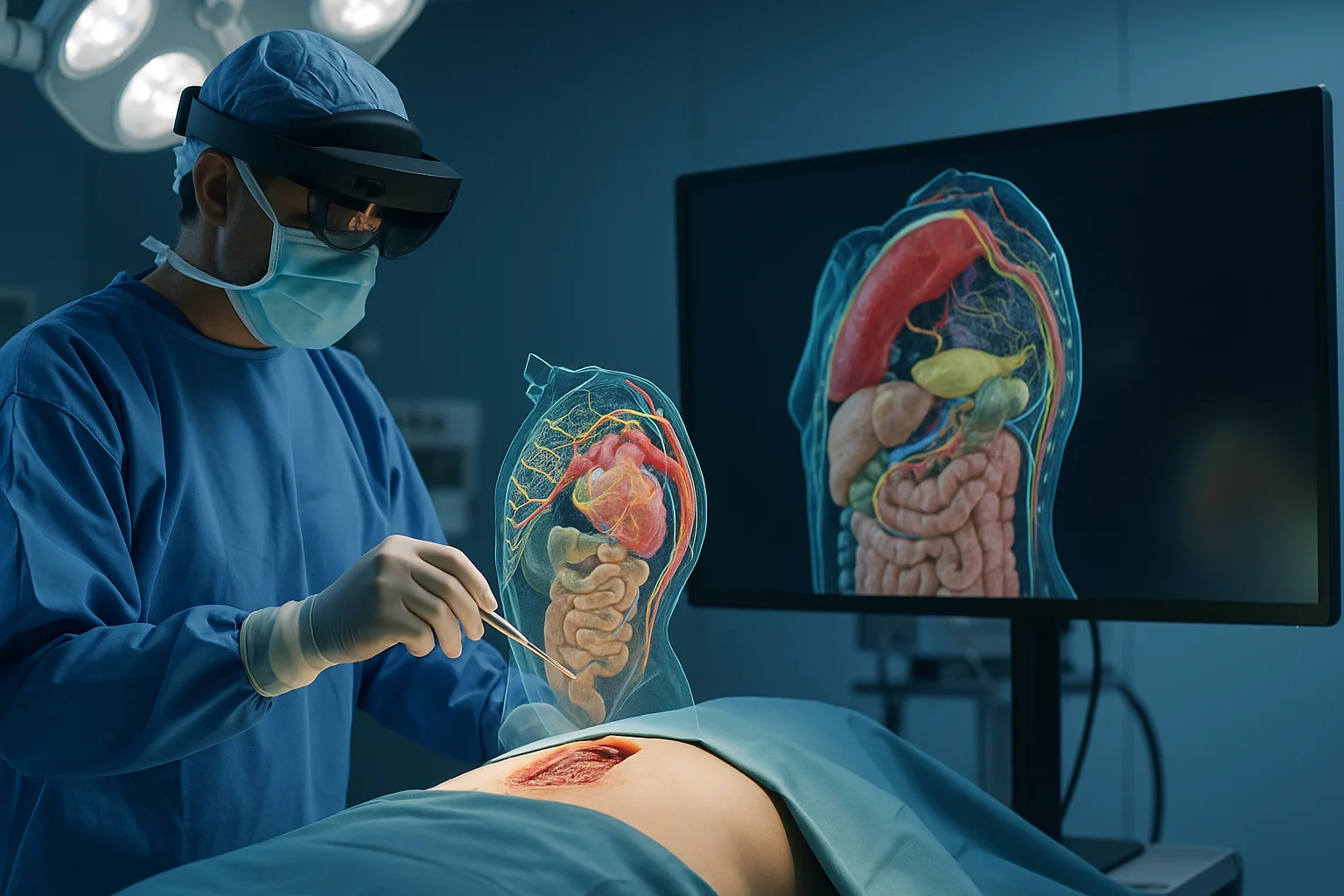
Augmented Reality and 3D in Surgical Procedures
Augmented reality and 3D modeling are transforming how surgical procedures are planned, performed and taught, giving surgeons a digital window into the patient's anatomy.
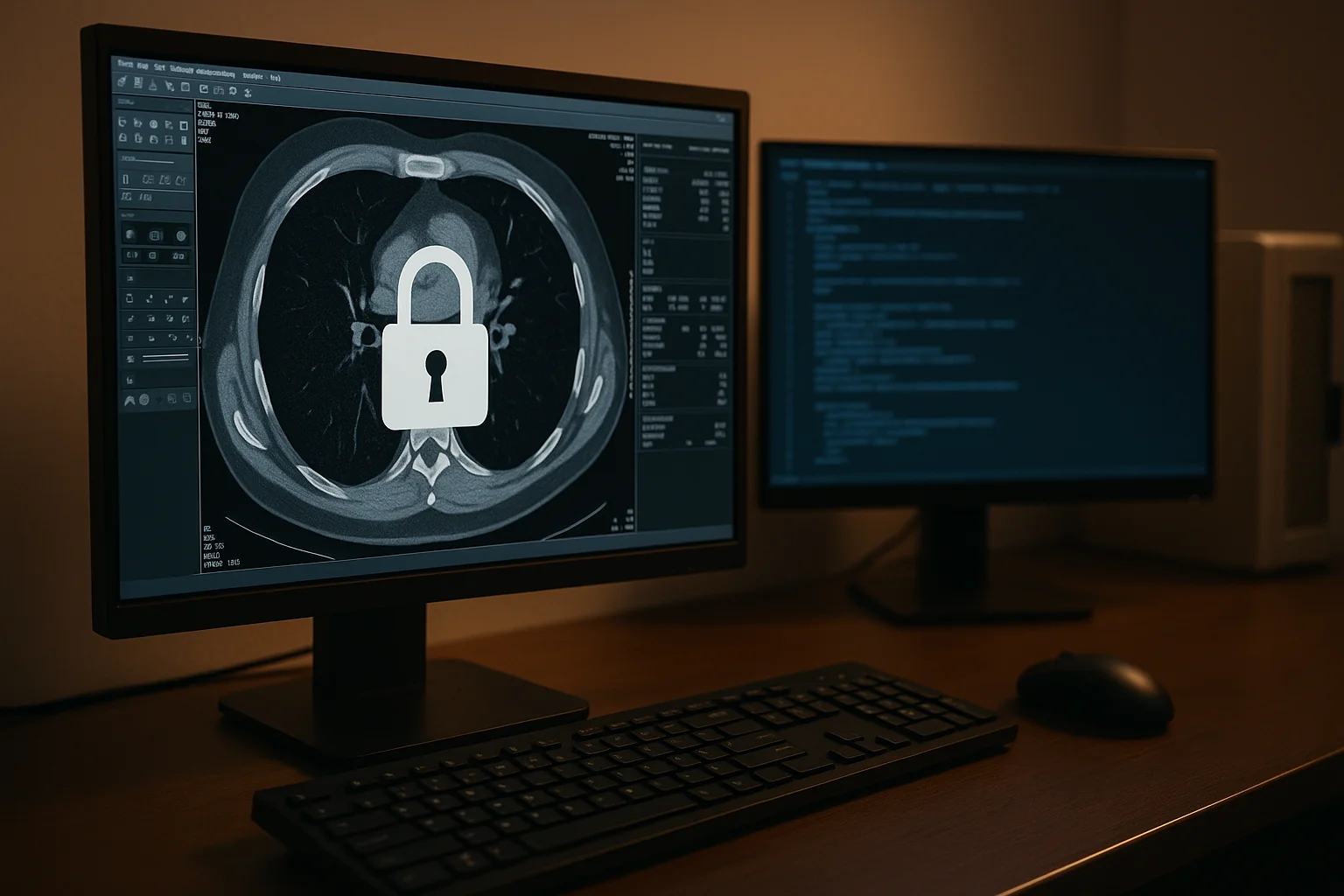
Data Security in Digital Radiology
Digital radiology handles sensitive images, predictive models and valuable clinical data. Protecting this information is essential to ensure safe diagnoses, patient trust and operational continuity.
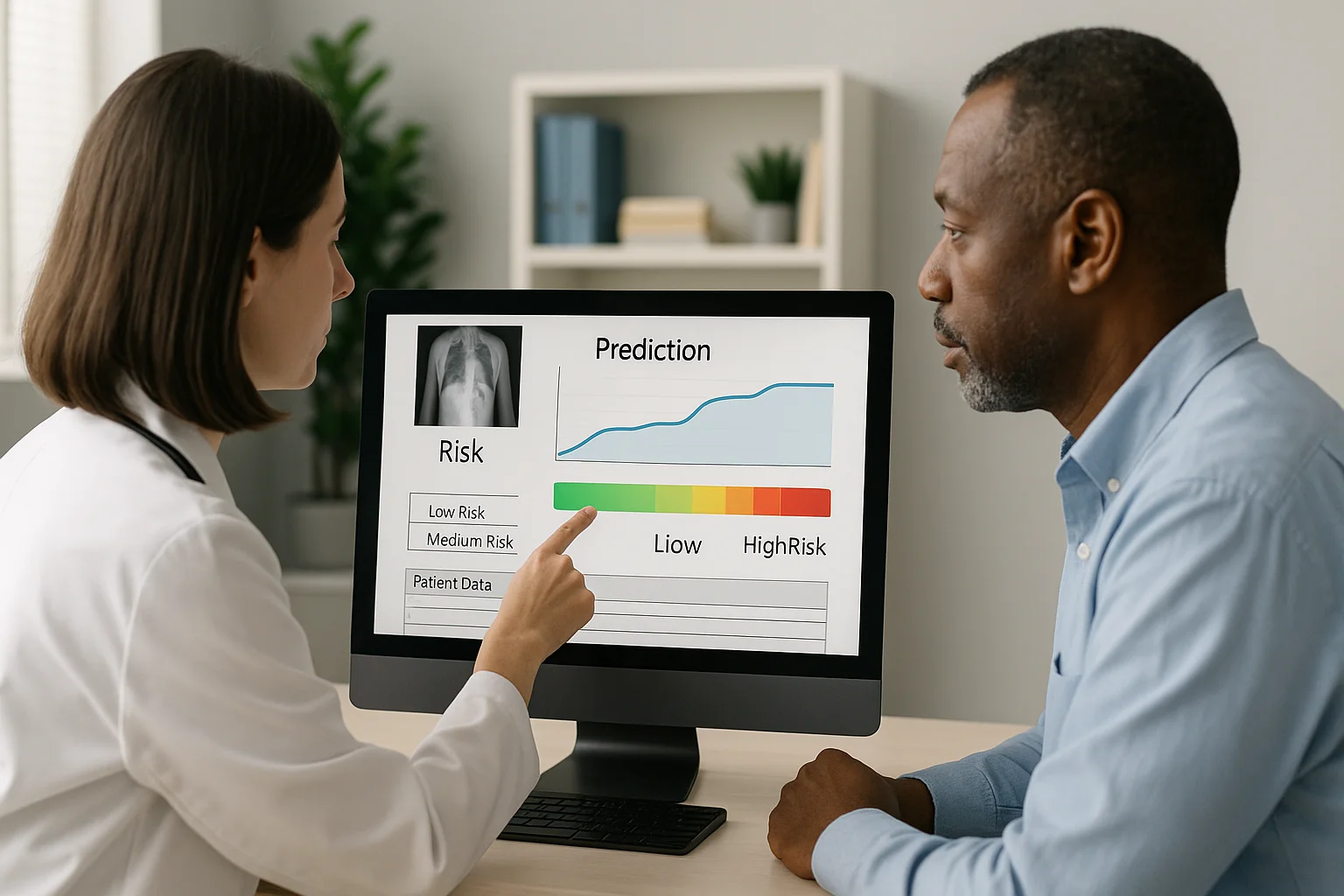
Image-Based Predictions: Medicine That Stays One Step Ahead
Thanks to artificial intelligence, medical images no longer just show what is happening, but what could happen. Predictive medicine turns every study into a tool to anticipate risks and save lives ahead of time.