
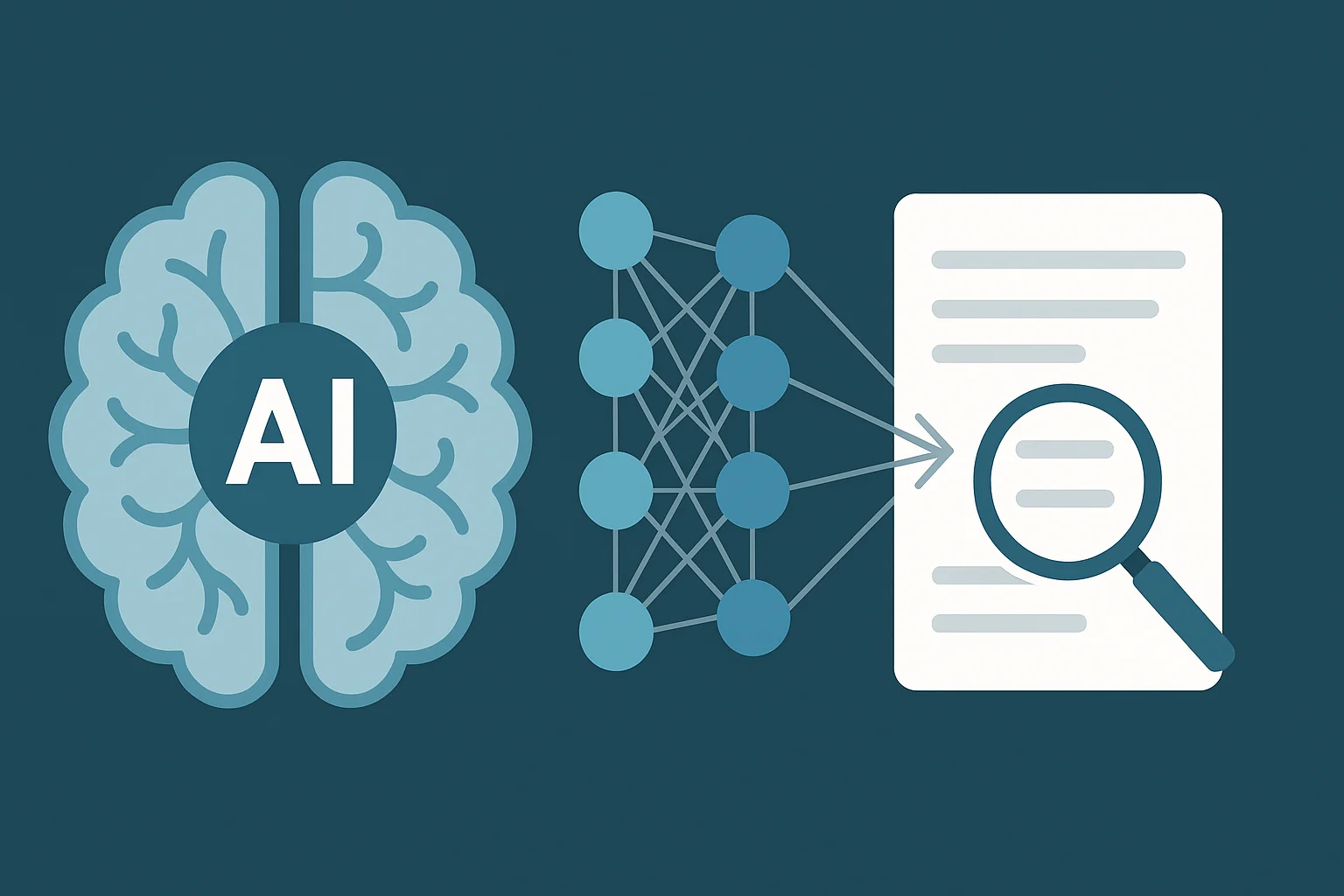
Explainable AI: Understanding How the Algorithm Thinks
Explainable AI: understanding how the algorithm thinks
In the previous article, “Remote radiology: collaborative diagnoses without borders”, we saw how technology is connecting physicians around the world to interpret images and save lives regardless of distance. But as algorithms take on a more active role in detecting disease, a new need arises: understanding how they think. This is where a key concept for the future of digital medicine comes into play: explainable AI.
The black box of artificial intelligence
Artificial intelligence systems, especially those based on deep learning, are incredibly powerful, but also opaque. We know what results they deliver, but not always why they deliver them. In an environment as sensitive as medicine, this poses a dilemma: physicians may accept a suggestion from the algorithm, but they need to understand its reasoning in order to trust it fully.
What did the AI rely on to flag that lesion as a tumor? Was it the shape, the texture, the density or a hidden pattern the human eye cannot perceive? The lack of answers to these questions has led scientists to develop a new field: Explainable Artificial Intelligence (XAI).
What explainable AI is
Explainable AI is a branch of artificial intelligence that seeks to make algorithms' decisions transparent. It is not just about a machine producing a result, but about it also being able to justify it. Its goal is to translate the model's mathematical logic into language humans can understand.
In medicine, this means the system does not merely state “there is a tumor”, but shows where it sees it, why it considers it suspicious and with what level of certainty. That way, the professional can validate the diagnosis and make decisions based on knowledge, not blind faith.
From automatic diagnosis to transparent diagnosis
In tumor detection, algorithms learn from thousands of medical images to identify patterns invisible to the human eye. However, those same models can be so complex that not even their creators fully understand how they reach a conclusion. Explainable AI makes it possible to open that “black box” and show the process behind the result.
This is achieved through visualization tools —such as heat maps or “heatmaps”— that highlight the exact areas of the image where the algorithm detected an anomaly. The result is safer collaboration between machine and physician.
Why AI must be understandable
Transparency is not a luxury; it is an ethical necessity. In medicine, every decision affects a life. That is why explainable AI does not seek to replace human intelligence, but to reinforce it with a new layer of clarity and accountability.
Its main benefits include:
- Medical trust: professionals understand the basis of the diagnosis and can validate or correct it.
- Patient safety: the risk of errors caused by mistaken automatic interpretations is reduced.
- Auditing and traceability: every algorithmic decision can be reviewed and justified before a medical or legal authority.
- Ethics and regulatory compliance: it makes it possible to meet standards such as the EU AI Regulation or FDA rules for clinical systems.
Toward empathetic and responsible AI
The medicine of the future will not only be intelligent; it will also be explainable and human. Algorithms will be able to justify their decisions in the same way a physician explains a diagnosis to a patient: with transparency, empathy and precision.
The challenge is not for machines to learn to think, but for us to learn to understand their thinking. True innovation will not be an AI that knows everything, but an AI that knows how to explain what it knows.
Conclusion
Explainable AI is the next logical step in the evolution of medical intelligence. It turns blind trust into informed trust and makes algorithms transparent allies rather than incomprehensible oracles. Because in 21st-century medicine, technology that cannot be explained simply cannot be used.
← Previous: Remote radiology: collaborative diagnoses without borders
Next: Report automation: the new era of the digital radiologist →
Related Articles
Keep exploring similar content.
Augmented Reality and 3D in Surgical Procedures
Augmented reality and 3D modeling are transforming how surgical procedures are planned, performed and taught, giving surgeons a digital window into the patient's anatomy.

Data Security in Digital Radiology
Digital radiology handles sensitive images, predictive models and valuable clinical data. Protecting this information is essential to ensure safe diagnoses, patient trust and operational continuity.

Image-Based Predictions: Medicine That Stays One Step Ahead
Thanks to artificial intelligence, medical images no longer just show what is happening, but what could happen. Predictive medicine turns every study into a tool to anticipate risks and save lives ahead of time.