
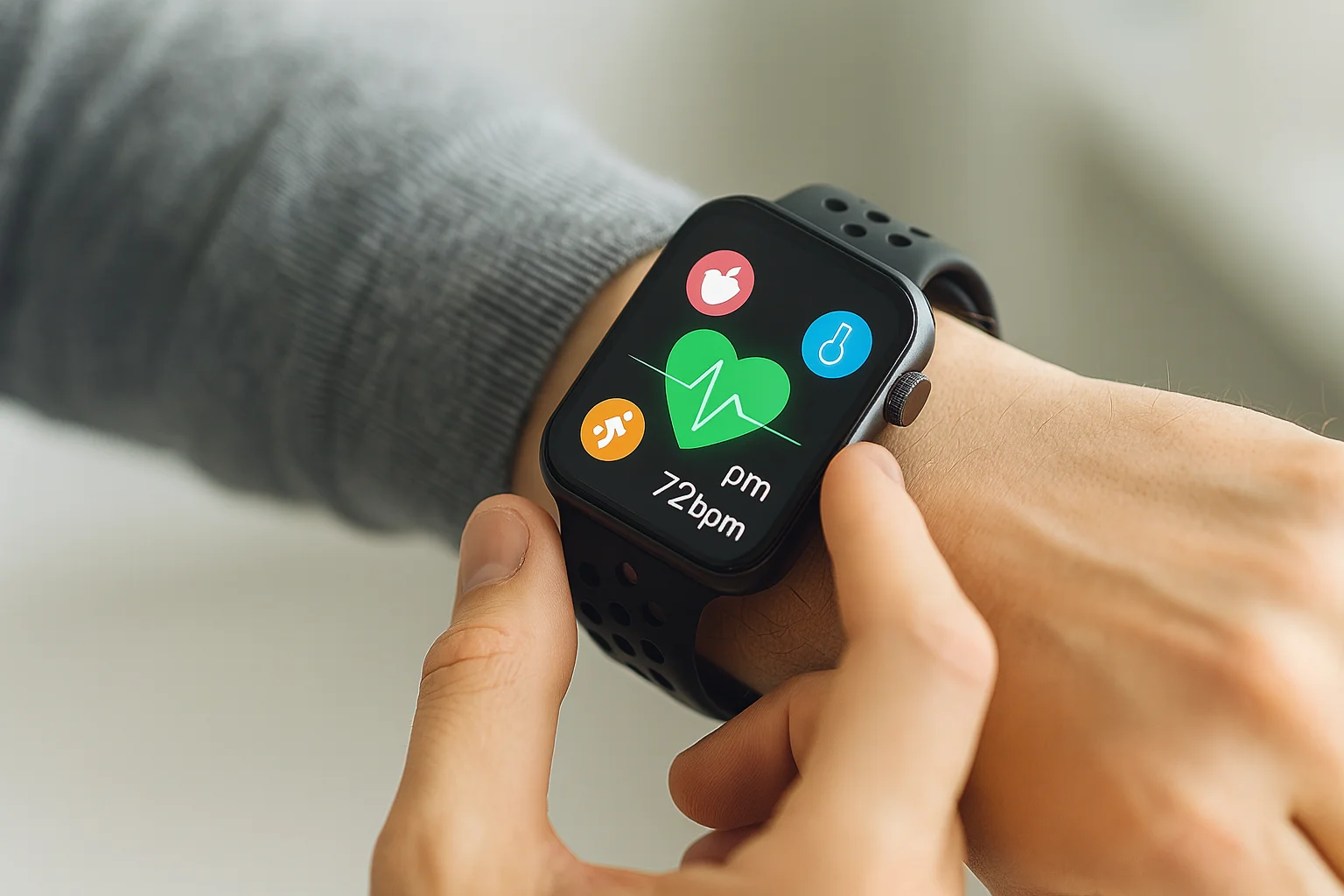
Wearables, Apps and Sensors: Health Now Travels With You
Wearables, apps and sensors: health now travels with you
In the previous article, “Clinical process automation: which tasks doctors will stop doing”, we discussed how technology is freeing healthcare professionals from repetitive tasks to give them back time and focus on the human side. But while hospitals are becoming automated, something even more revolutionary is happening outside them: health has become portable.
From hospitals to your pocket: a silent revolution
Just a few years ago, monitoring your health meant going to an appointment, waiting for results and relying on complex equipment. Today, all you need to do is look at your wrist. Wearables, mobile apps and biometric sensors have brought medicine closer than ever before. Your body is constantly talking, and these devices have learned to listen.
Every heartbeat, every step, every breath leaves a digital footprint. Smartwatches, heart rate straps, sleep rings, connected scales, glucose sensors and wellness apps make up a new ecosystem where health is measured, analyzed and predicted in real time.
The body as an interface
The new medical frontier is not the operating room: it is your own connected body. Wearables and sensors turn every person into a continuous source of biometric data that can prevent diseases before symptoms appear. Thanks to them, it is now possible to detect an arrhythmia, identify a stress pattern or anticipate an asthma attack hours in advance.
But the real revolution is not in the device, but in data integration. When this data connects with telemedicine platforms, smart medical records or predictive analytics systems, medicine stops being reactive and becomes predictive and personalized.
From data to well-being
It is not just about knowing how many steps you took or how many hours you slept. The information collected by these devices helps change behaviors and promote healthy habits. Health apps alert you, motivate you and keep you company. They are the new personal trainer, the friendly reminder and, in some cases, the silent guardian that can save your life.
This cultural shift has led millions of people to take an active role in their well-being. The patient is no longer just a patient: they are the protagonist. And the doctor-patient relationship is enriched, because both share data, decisions and common goals.
The challenge of personal data
However, as healthcare becomes digital, a key question arises: who protects all that information? Biometric data is extremely sensitive, and managing it ethically is as important as its medical usefulness. That is why technology companies and healthcare systems must guarantee the privacy, encryption and informed consent of every user. In the new connected medicine, trust is the foundation.
Health on the move
Health is no longer checked once a year. It is now monitored every second, with every breath, while you walk, work or sleep. Devices do not replace the doctor, but they do keep them informed in real time. And most importantly: they make you an active part of the process.
Conclusion
The union of wearables, apps and sensors represents the democratization of health. Well-being no longer depends only on hospital infrastructure, but also on the technology you carry with you. What used to be science fiction now vibrates on your wrist: your health travels with you, is measured, adapts and takes care of you
← Previous: Clinical process automation: which tasks doctors will stop doing
Next: Artificial intelligence in diagnostics: the leap from intuition to data →
Related Articles
Keep exploring similar content.
The Future Is Hybrid: Human Medicine + Artificial Intelligence
The future of medicine is neither human nor artificial: it is hybrid. An alliance between the doctor's empathy and the precision of algorithms that promises to save more lives and provide better care.
Smart Hospitals: What Healthcare Will Look Like in 2030
By 2030, hospitals will not just be buildings: they will be digital ecosystems where artificial intelligence, robotics and data come together to deliver personalized, safe and more human care.

Ethics, Privacy and Consent in Digital Medicine
Ethics, privacy and consent are the three pillars of modern digital medicine: they ensure that technology protects patient data and respects human will in every digital decision.