
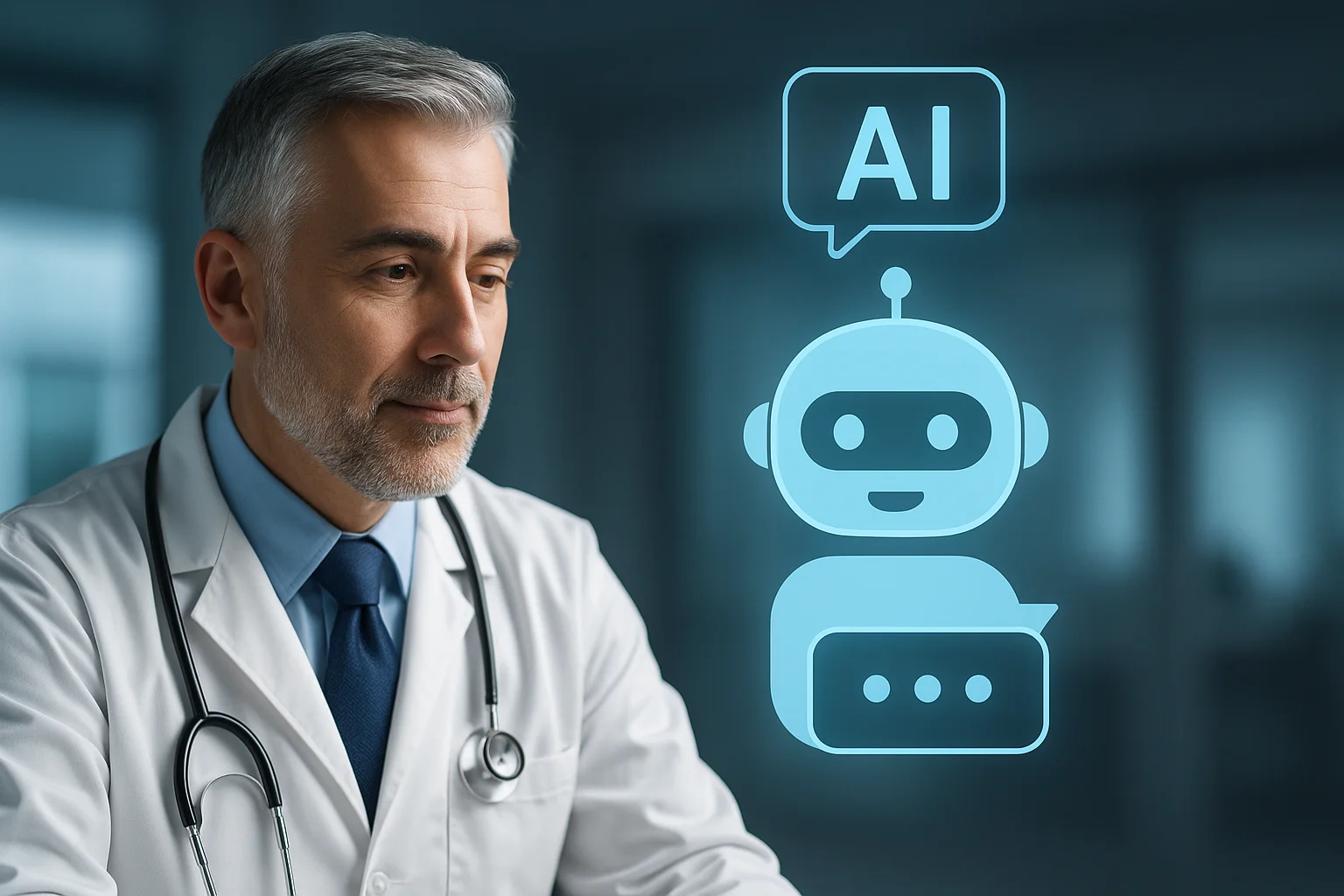
The Future Is Hybrid: Human Medicine + Artificial Intelligence
The future is hybrid: human medicine + artificial intelligence
In the previous article, “Smart hospitals: what healthcare will look like in 2030”, we explored how the healthcare centers of the future will be connected by networks of data, sensors and algorithms working in the service of patients. But behind that technological revolution lies something deeper that is transforming the essence of medicine: the fusion of human intelligence and artificial intelligence. The future will be neither digital nor biological… it will be hybrid.
Two intelligences, one purpose
For centuries, medicine was based on human experience: the clinical eye, intuition, empathy. Today, artificial intelligence (AI) has shown that it can analyze millions of data points, detect invisible patterns and offer diagnoses with astonishing accuracy. But neither of them —neither human nor machine— can do it all alone. Medicine's real leap happens when both work together.
The doctor interprets the context; the algorithm detects the correlation. The professional understands the soul; the machine understands the data. And between them, a new model of care emerges: faster, more precise and more human than ever.
Hybrid medicine: collaboration, not substitution
In the popular imagination, AI is often seen as a threat. But in healthcare, its role is not to replace but to empower. Algorithms free doctors from repetitive tasks —such as reviewing thousands of images or reports—, allowing them to devote more time to what no machine can do: listen, accompany and decide with compassion.
Hybrid medicine is not a distant future: it is already happening. In smart hospitals, AI systems help prioritize emergencies, identify risks early and personalize treatments according to the patient's DNA. The doctor stops being a data operator and becomes a health strategist.
The power of data interpreted with humanity
Wearables, sensors, digital records and interconnected platforms generate an ocean of information every second. However, the value of that data lies not in its volume but in its ethical and human interpretation. Artificial intelligence can process it, but only the doctor can put it in context. From that synergy, truly personalized medicine is born.
Imagine a system that predicts a heart attack before it happens, but also a doctor who knows how to communicate it, how to reassure, how to accompany. That balance is the soul of hybrid medicine.
The new medical training
The healthcare professional of the future will need to master both anatomy and algorithms. To understand biology and data, empathy and digital ethics. Medical education is already evolving toward a multidisciplinary model, where doctors learn to work side by side with engineers, data scientists and developers.
Hybrid medicine demands a new kind of intelligence: collaborative intelligence, capable of uniting technology and humanity without one overshadowing the other.
Ethics and purpose in the hybrid era
In this new paradigm, medical ethics will be more crucial than ever. An algorithm's precision must not overshadow the doctor's moral responsibility. Every automated diagnosis, every data-driven decision, must be accompanied by transparency, consent and empathy. Technology is a tool; conscience is its limit.
Conclusion
The future of medicine belongs neither to humans nor to machines, but to the alliance between the two. A union where data science and the art of healing meet. In 2030 and beyond, hybrid medicine will make the difference between curing and caring, between diagnosing and understanding. Because when artificial intelligence joins human intelligence, humanity is not lost: it is multiplied.
← Previous: Smart hospitals: what healthcare will look like in 2030
Related Articles
Keep exploring similar content.
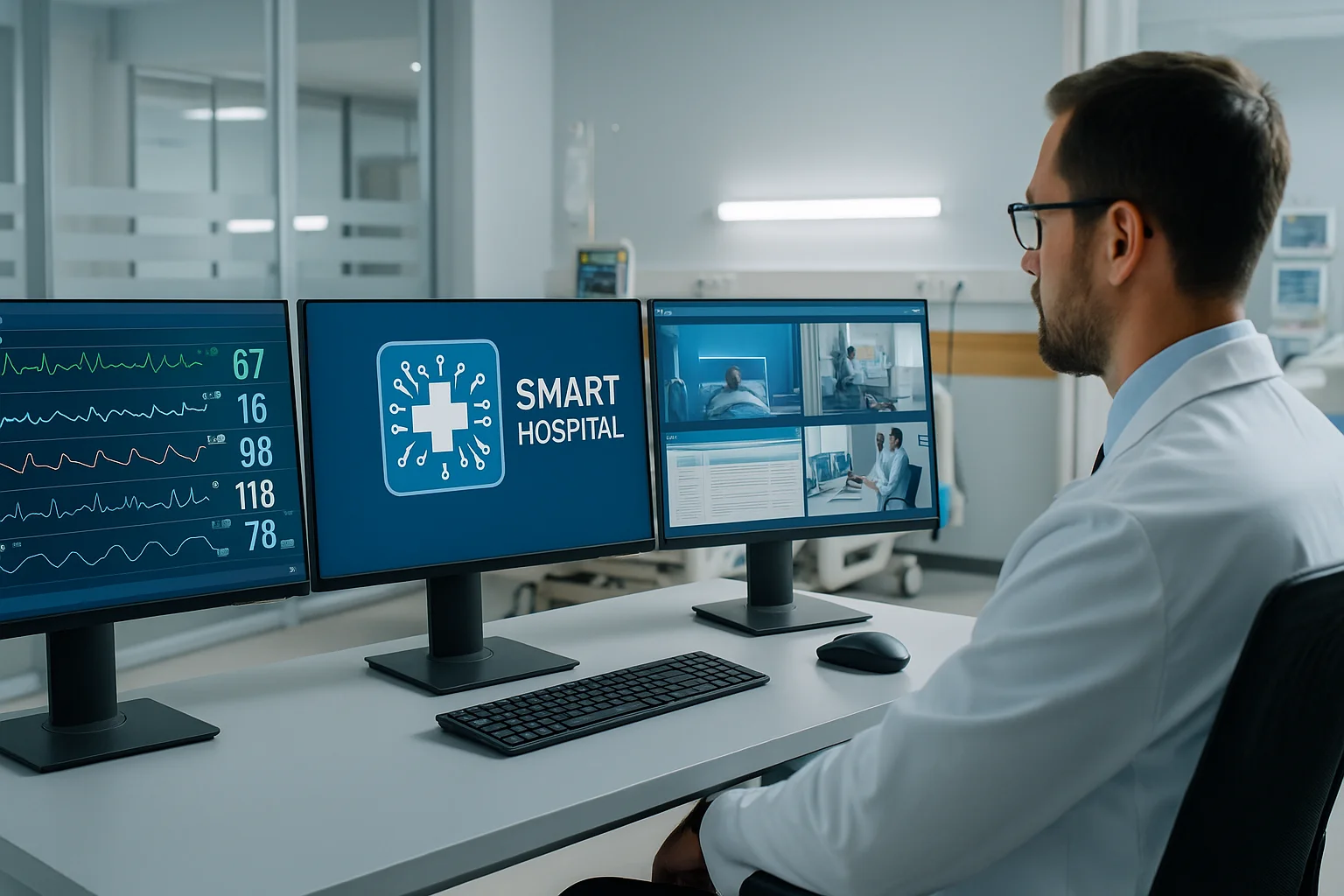
Smart Hospitals: What Healthcare Will Look Like in 2030
By 2030, hospitals will not just be buildings: they will be digital ecosystems where artificial intelligence, robotics and data come together to deliver personalized, safe and more human care.

Ethics, Privacy and Consent in Digital Medicine
Ethics, privacy and consent are the three pillars of modern digital medicine: they ensure that technology protects patient data and respects human will in every digital decision.
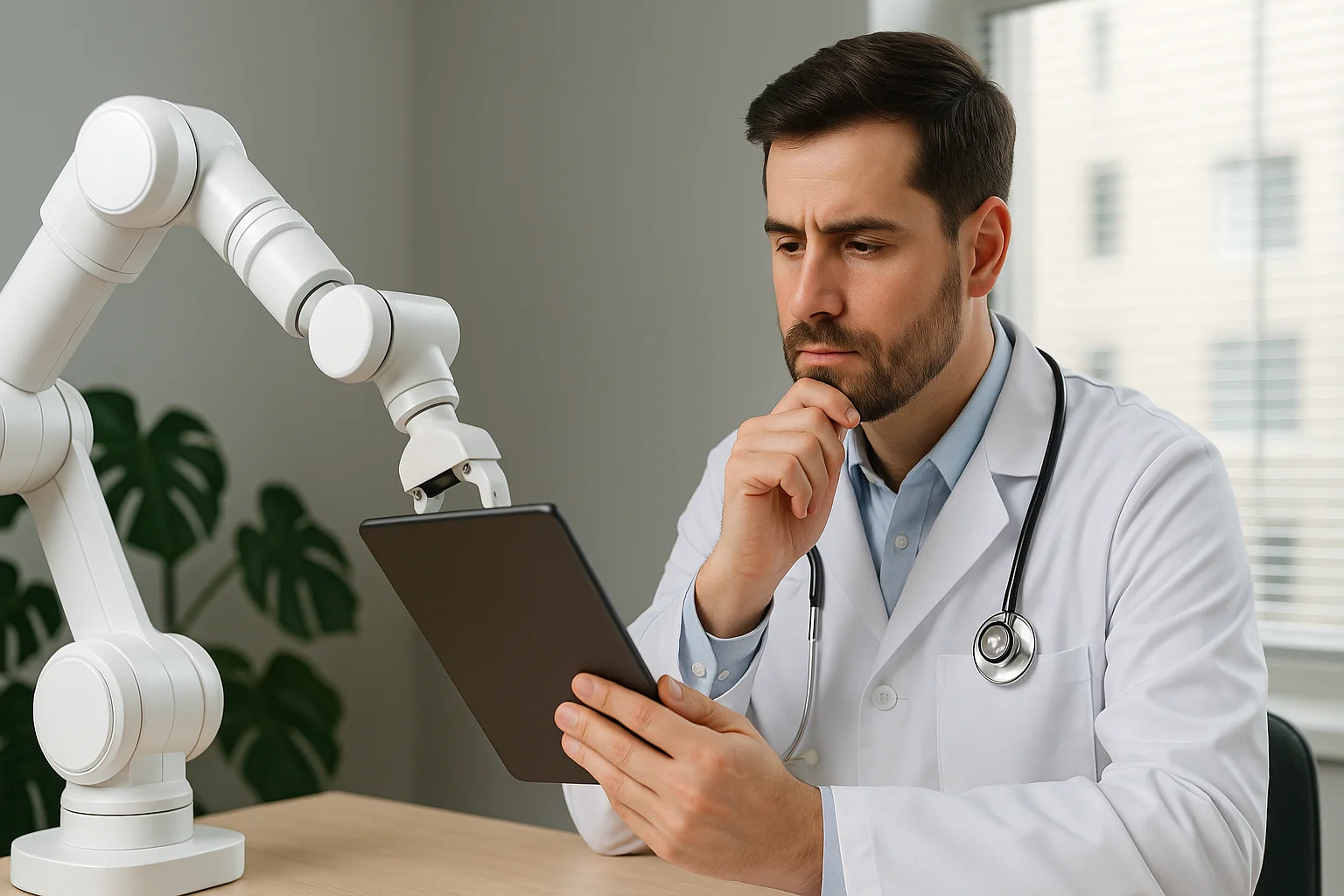
The Role of the Doctor in an Automated World
In an era dominated by algorithms and intelligent machines, the role of the doctor is being redefined: less repetition, more empathy, leadership and critical thinking.