
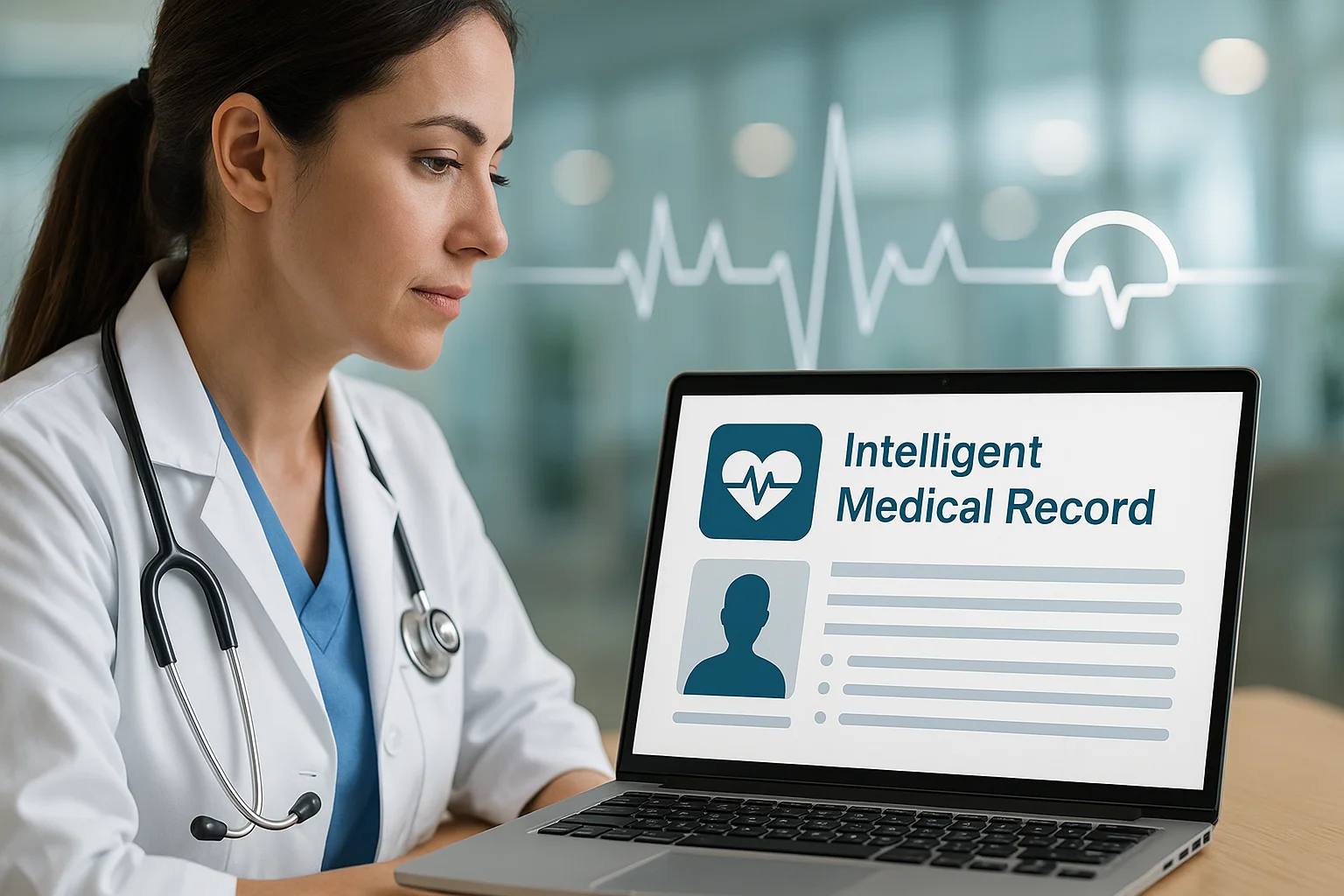
Smart Medical Records: The Heart of the New Healthcare System
Smart medical records: the heart of the new healthcare system
In our previous article, “The birth of the digital health ecosystem: from paper records to the cloud”, we explored how technology transformed medicine from dusty files to cloud-based systems. But that was only the first part of the journey. Today we dive into the next big step: smart medical records, the true heart that keeps the new healthcare system beating.
From storage to intelligence
For years, the goal was to store data. Now, the challenge is to make that data speak. Smart medical records are not simple databases: they are living systems capable of learning, analyzing patterns and anticipating medical needs before a problem shows up.
Imagine a record that not only stores your medical information but also detects potential risks, suggests treatments based on your history and communicates in real time with laboratories, pharmacies and specialists. It is a paradigm shift: from reactive medicine to predictive medicine.
The new pulse of the healthcare system
In this new scenario, medical records have become the nerve center of the healthcare ecosystem. They are the bridge between data and decisions, between doctor and patient, between prevention and action.
Every update, every diagnosis and every result feeds a system that not only stores but understands. A system that can flag a cardiac anomaly, recommend a change in medication or detect a population-level contagion pattern before it makes the news.
Beyond hospitals
The concept of the smart medical record is not limited to hospitals or clinics. It is already present in mobile apps, wearable devices and telemedicine platforms. Your data travels with you, protected and accessible, so that medical care goes with you instead of waiting for you.
Interoperability is key to this revolution. Medical systems must talk to each other, share information securely and ensure that every healthcare professional, wherever they are, has a complete and up-to-date view of the patient.
The ethical and human challenge
But with power comes responsibility. Smart medical records handle extremely sensitive data, and for that reason security and ethics become as important as innovation. Trust is the fuel that keeps this whole ecosystem running.
Beyond algorithms and servers, the goal remains the same: caring for lives. Medical intelligence does not seek to replace the doctor but to empower them; it does not dehumanize medicine, it raises it to a more empathetic, precise and closer level.
Conclusion
Smart medical records are much more than a technological evolution; they are the heartbeat of a healthcare system that learns, connects and anticipates. They represent the point where data science and medical vocation meet to build a future in which health is not only treated but also predicted and proactively cared for.
In the next chapter of this series, we will explore how artificial intelligence and machine learning are redefining clinical decision-making. The future has already begun, and its heart beats with data.
← Previous: The birth of the digital health ecosystem: from paper records to the cloud
Next: The digital patient: how the doctor-patient relationship changed in 10 years →
Related Articles
Keep exploring similar content.
The Future Is Hybrid: Human Medicine + Artificial Intelligence
The future of medicine is neither human nor artificial: it is hybrid. An alliance between the doctor's empathy and the precision of algorithms that promises to save more lives and provide better care.
Smart Hospitals: What Healthcare Will Look Like in 2030
By 2030, hospitals will not just be buildings: they will be digital ecosystems where artificial intelligence, robotics and data come together to deliver personalized, safe and more human care.

Ethics, Privacy and Consent in Digital Medicine
Ethics, privacy and consent are the three pillars of modern digital medicine: they ensure that technology protects patient data and respects human will in every digital decision.