
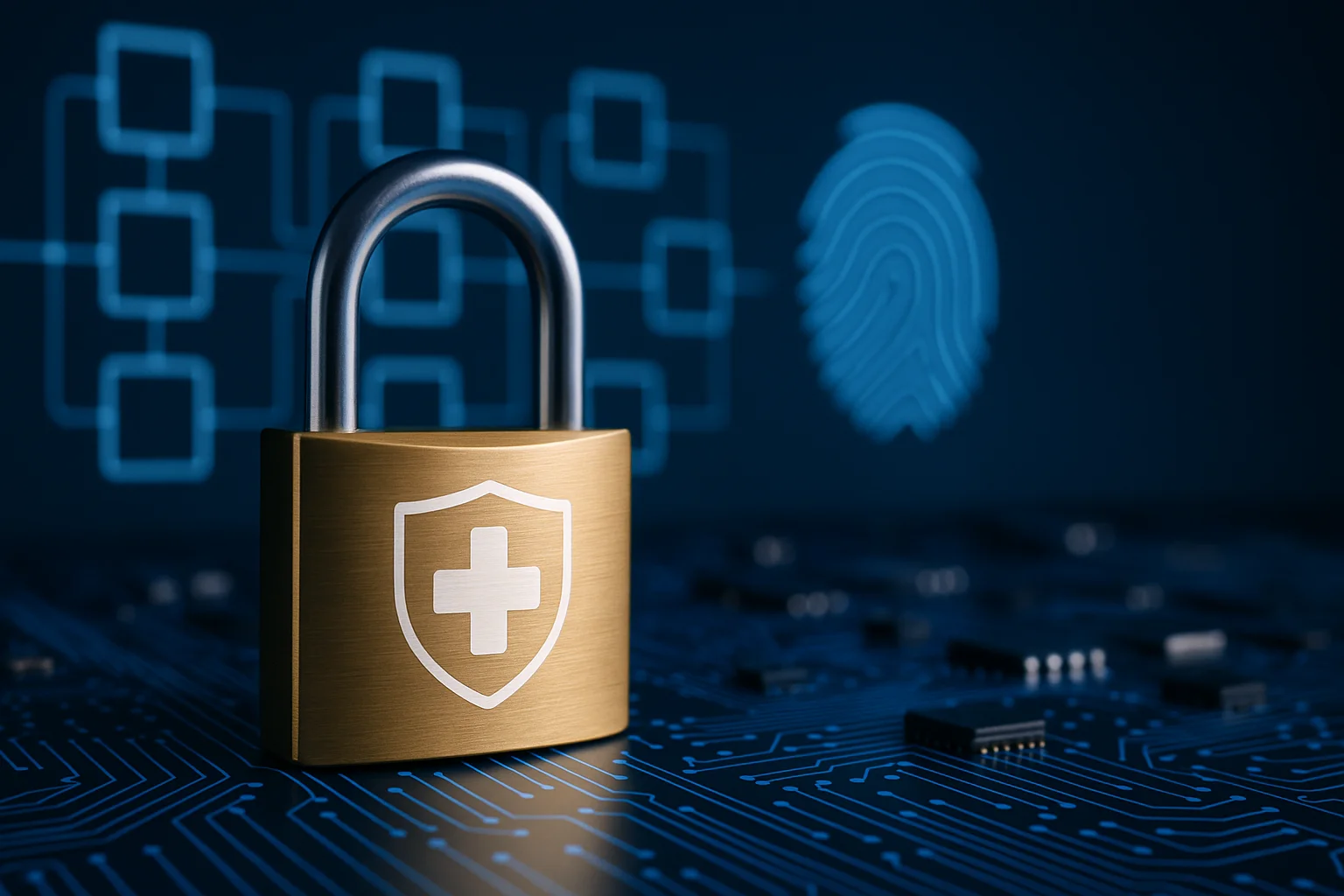
Medical Blockchain: The Era of Absolute Security and Traceability
Medical blockchain: the era of absolute security and traceability
In the previous article, “Interoperability in healthcare: how to get all systems talking to each other”, we analyzed the importance of connecting all healthcare systems so that data can flow without barriers. But in that constant exchange of information, a big question arises: how do we guarantee that this data is secure, authentic and traceable? The answer comes from a technology that changed the financial world and now promises to transform medicine: medical blockchain.
Trust as the new pillar of digital health
In the modern healthcare ecosystem, millions of data points are generated every second: diagnoses, electronic prescriptions, lab results, medical images and clinical records. Interoperability connects them, but only blockchain can protect them. This technology does not just store information, it certifies it, ensuring that no data is altered without leaving a trace.
In an environment where privacy and accuracy save lives, blockchain becomes the guarantor of medical truth.
What is blockchain applied to healthcare?
Blockchain, or chain of blocks, is a decentralized system where information is stored in linked, encrypted blocks. Every time a piece of data is modified, a new block is generated, creating a historical record that is impossible to forge. In medicine, this means that every action —a consultation, a prescription, a diagnosis— can be recorded, verified and protected forever.
Unlike traditional databases, there is no single vulnerable server. Power is distributed among thousands of nodes, which makes manipulation or unauthorized access practically impossible.
Real applications of medical blockchain
- Immutable medical records: every change is recorded, guaranteeing full traceability.
- Digital patient consent: users can authorize or revoke access to their data in real time, with full transparency.
- Pharmaceutical supply chain: secure tracking of medicines from the factory to the patient, preventing counterfeits.
- Ethical clinical research: validation and anonymization of medical data for trials, ensuring its authenticity without compromising privacy.
- Billing and insurance: automation of medical claims through smart contracts (“smart contracts”) that eliminate fraud and errors.
Blockchain and patient empowerment
For the first time, patients can be owners of their own medical data. Blockchain allows them to decide who can see their information, for how long and for what purpose. It is no longer just about security, but about digital autonomy.
In addition, healthcare institutions gain trust and efficiency by reducing the risks of cyberattacks, duplication and errors in data management.
Challenges and the future of blockchain in healthcare
Although its potential is enormous, medical blockchain faces significant challenges: standardizing protocols, scaling networks and balancing privacy with accessibility. Even so, the trend is unstoppable. Every year, more countries and hospitals implement blockchain solutions to guarantee the integrity of health information.
In the future, medical records could work as a universal digital identity: a verifiable record, accessible anywhere in the world, protected by cryptography and validated by consensus.
Conclusion
The arrival of medical blockchain marks the beginning of a new era in digital health: the era of total trust. A system where every piece of data is verifiable, every change is recorded and every patient has absolute control over their information. It is the perfect complement to interoperability, because it is not enough for systems to talk to each other: they have to tell the truth.
← Previous: Interoperability in healthcare: how to get all systems talking to each other
Related Articles
Keep exploring similar content.
The Future Is Hybrid: Human Medicine + Artificial Intelligence
The future of medicine is neither human nor artificial: it is hybrid. An alliance between the doctor's empathy and the precision of algorithms that promises to save more lives and provide better care.
Smart Hospitals: What Healthcare Will Look Like in 2030
By 2030, hospitals will not just be buildings: they will be digital ecosystems where artificial intelligence, robotics and data come together to deliver personalized, safe and more human care.

Ethics, Privacy and Consent in Digital Medicine
Ethics, privacy and consent are the three pillars of modern digital medicine: they ensure that technology protects patient data and respects human will in every digital decision.