
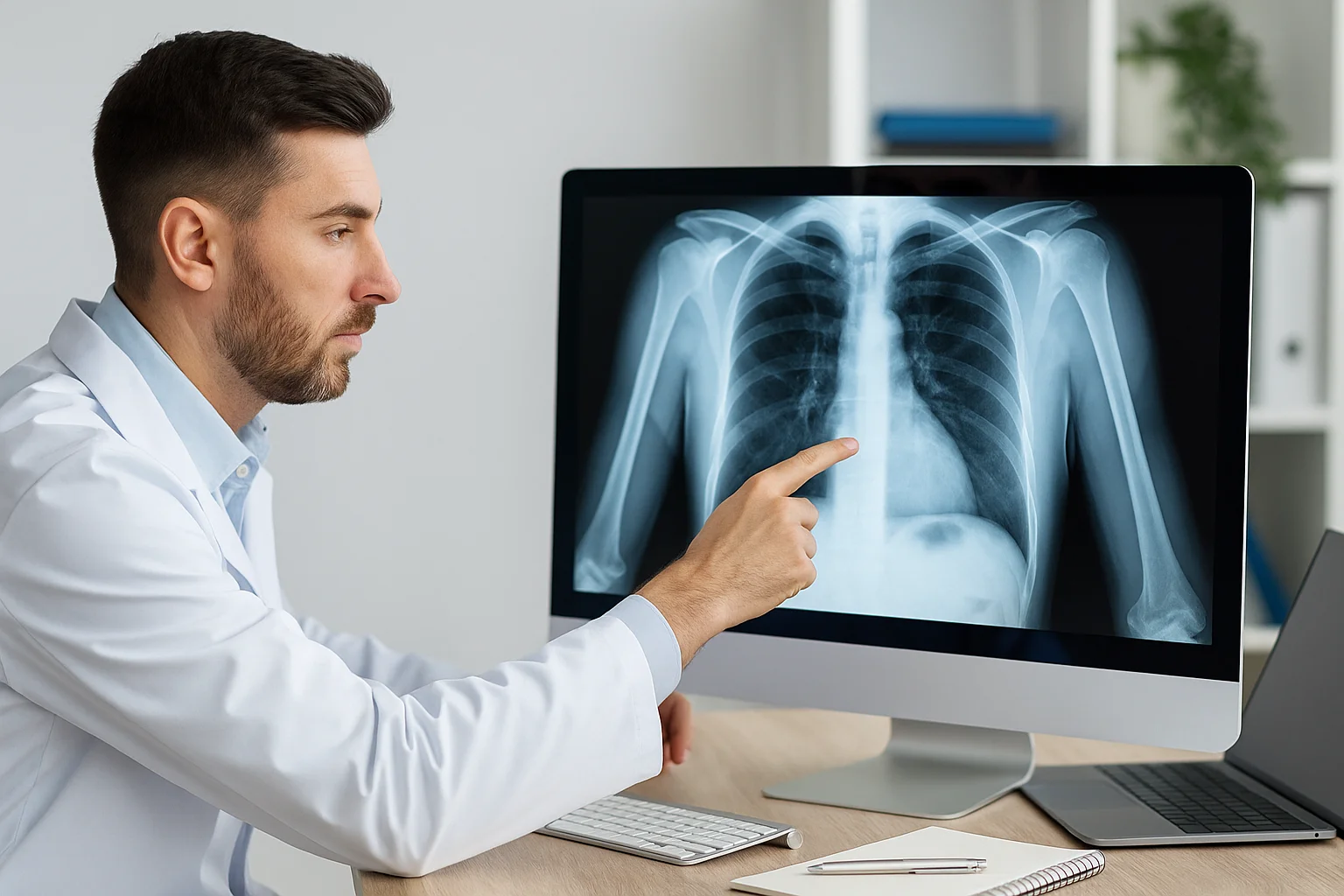
AI in Diagnostics: The Leap From Intuition to Data
Artificial intelligence in diagnostics: the leap from intuition to data
In the previous article, “Wearables, apps and sensors: health now travels with you”, we explored how personal devices have turned every step, heartbeat and breath into useful medical information. But on their own, those data are just numbers. The real change comes when artificial intelligence enters the scene and turns those millions of data points into accurate diagnoses and life-saving decisions.
From clinical instinct to data analysis
For centuries, medical diagnosis depended largely on the professional's intuition and experience. Today, medical AI offers a new way of looking at health: not from a hunch, but from correlation. Algorithms learn from millions of previous cases, identify patterns invisible to the human eye and propose evidence-based diagnoses in seconds.
It is not about replacing the doctor's intuition, but about reinforcing it with analytical power that no single brain could achieve. AI does not feel, but it understands; it does not imagine, but it compares; it does not hesitate, but it learns.
How AI is changing medical practice
Intelligent systems are already transforming multiple areas of medicine:
- Radiology: algorithms capable of detecting tumors in images with 98% accuracy, even before they are visible to the human eye.
- Ophthalmology: automated retinal analysis to detect early signs of diabetes or glaucoma.
- Cardiology: models that predict the risk of heart attacks or arrhythmias based on previous electrocardiograms.
- Oncology: artificial intelligence that analyzes a tumor's DNA to personalize the most effective treatment for each patient.
In each of these fields, AI acts as a tireless second pair of eyes, always alert and never distracted.
From personal data to predictive diagnosis
The connection with wearables and sensors has taken AI to a new level: that of predictive medicine. It is no longer limited to interpreting medical tests; it analyzes patterns of behavior, heart rate, sleep and movement to anticipate possible health problems. A smartwatch can warn of atrial fibrillation; an app, of a metabolic imbalance; a system, of a risk of depression. It is the leap from reactive diagnosis to proactive diagnosis.
The balance between data and humanity
Artificial intelligence can process millions of clinical cases, but only the doctor can interpret the human context. The key is collaboration: letting AI handle detection and calculations while the professional contributes empathy, judgment and ethics. Together, they build a faster, more precise and more human medicine.
The challenge: understanding in order to trust
For AI to be adopted on a massive scale, both doctors and patients must trust it. And trust is earned through transparency: auditable algorithms, explainable decisions and absolute protection of personal data. The challenge is not only technical, but also cultural.
Conclusion
Artificial intelligence in diagnostics represents one of the greatest advances of modern medicine. It does not replace experience; it enhances it. It does not eliminate intuition; it guides it with data. It is the alliance between machine precision and human wisdom. The result: earlier diagnoses, more personalized treatments and a new paradigm where medicine stops being either art or science and becomes both.
← Previous: Wearables, apps and sensors: health now travels with you
Next: Predictive prevention: detecting diseases before they appear →
Related Articles
Keep exploring similar content.
The Future Is Hybrid: Human Medicine + Artificial Intelligence
The future of medicine is neither human nor artificial: it is hybrid. An alliance between the doctor's empathy and the precision of algorithms that promises to save more lives and provide better care.
Smart Hospitals: What Healthcare Will Look Like in 2030
By 2030, hospitals will not just be buildings: they will be digital ecosystems where artificial intelligence, robotics and data come together to deliver personalized, safe and more human care.
Ethics, Privacy and Consent in Digital Medicine
Ethics, privacy and consent are the three pillars of modern digital medicine: they ensure that technology protects patient data and respects human will in every digital decision.