
AI in Your Business Without Giving Away Your Data: 5 Rules
In this article
Carla owns a clothing store in Guayaquil and discovered artificial intelligence one Tuesday night. In ten minutes, an AI chat wrote descriptions for twenty new blouses, suggested ideas for Instagram and helped her reply to an upset customer. She felt like she had superpowers.
On Wednesday she got even more excited. She copied her full customer list into the chat, with names, ID numbers and phone numbers, so the AI could put together a campaign. And on Thursday she pasted the store's income statement so it could "explain the numbers" to her.
On Friday, her accountant asked her a question that stopped her cold: "Carla, do you know where all that information ended up being stored?".
Carla is an illustrative character. But what happened to her is very common: AI is so useful that it is easy to forget it is also a tool that must be used wisely.
The problem is not AI, it is how we use it
Artificial intelligence tools can save a small business hours: writing copy, summarizing documents, organizing ideas, preparing email drafts or analyzing trends. Using them is not the risk.
The risk appears when they are used without rules: when customer information that should not be shared is shared, when what the AI wrote is published without review, or when important decisions are made just because "the AI said so".
In Ecuador, there is also the Organic Law on Personal Data Protection, which requires people's information to be handled with care. Your customers' data is not only yours: they entrusted it to you.
Carla's turning point
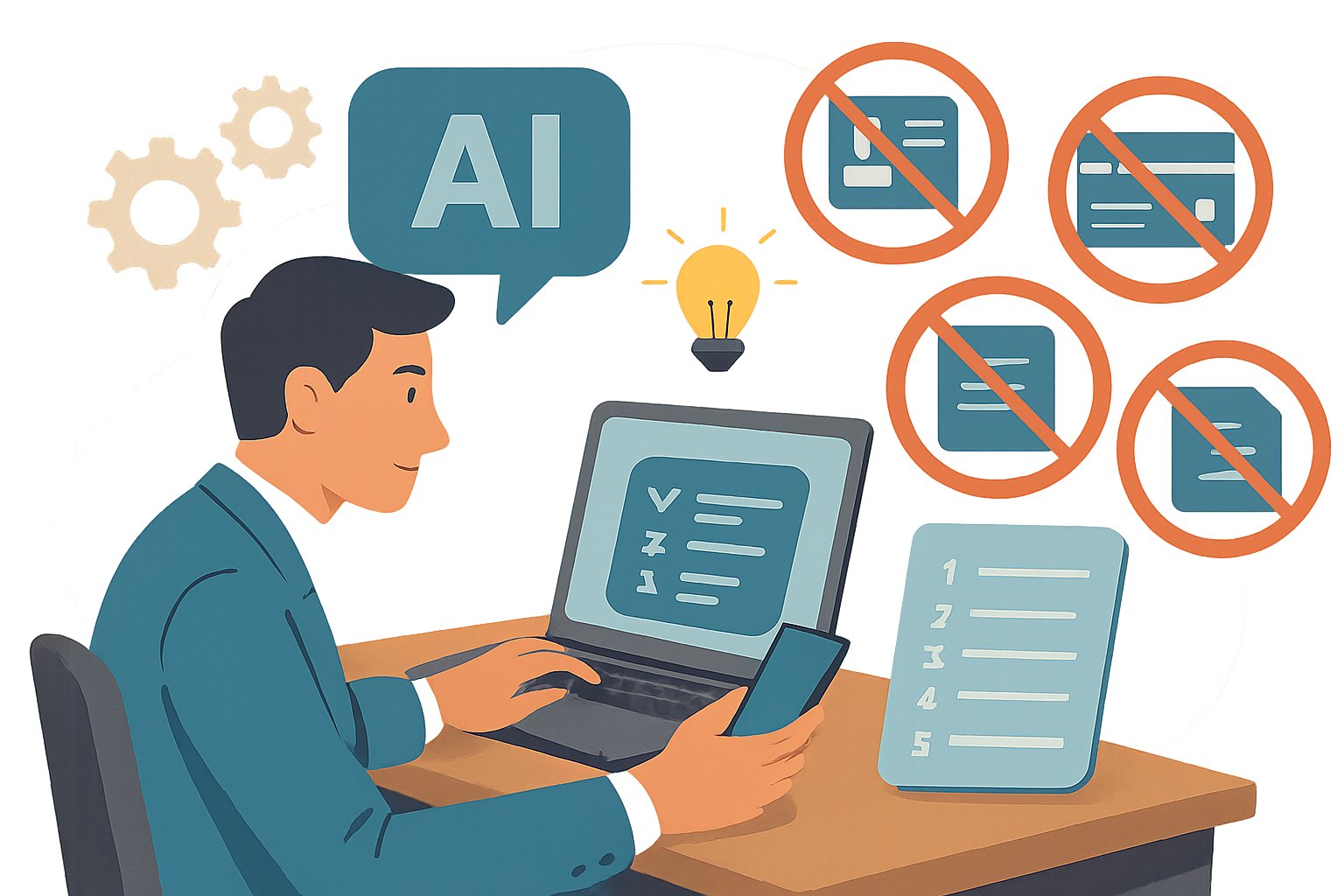
After her accountant's question, Carla did not stop using AI. She did something smarter: she sat down one afternoon to define how she would use it in her business. She wrote five rules on a sheet of paper and stuck it next to the cash register so her whole team could see them.
5 rules for using AI in your business without unnecessary risks
1. Never paste customers' personal data
Full names, ID numbers, phone numbers, addresses, identifiable purchase history: all of that stays out of public AI chats. If you need help with a campaign, describe your typical customer ("women aged 25 to 40 who buy office wear") instead of pasting your database.
2. Protect financial and strategic information
Your margins, your suppliers and your numbers are sensitive information. If you want AI to help you understand a report, use rounded figures or examples, and review the tool's privacy terms before sharing real documents.
3. AI suggests, you decide
AI can be wrong with complete confidence: making up data, confusing tax rules or giving advice that does not apply to Ecuador. Use what it gives you as an intelligent draft, not as the truth. For tax, legal or accounting matters, always confirm with a professional or the official source.
4. Review before publishing
A product description with a wrong measurement or a promise you cannot keep is costly for your reputation. Read everything the AI writes, adjust it to your brand's tone and check the facts before publishing.
5. Use AI inside tools designed for your work
There is a difference between copying and pasting information into a generic chat and using AI features built into the system where you already work, with a specific purpose. When AI lives inside your management tool, you use it for specific tasks (such as writing a product description) without having to copy and paste your information into other platforms. Even so, always ask your provider how they handle your data.
Where AI really shines for a small business
With those rules in place, AI becomes a great ally. Some tasks where it usually saves time:
- Writing attractive, consistent product descriptions.
- Preparing draft answers to customers' frequently asked questions.
- Generating ideas for social media posts.
- Summarizing long documents, such as contracts or manuals, to understand the main points (and then carefully reading what matters).
- Organizing a task list or a weekly plan.
Notice that none of them requires sharing customers' personal data. That is the sign that you are on the right track and that AI is working for you, not the other way around.
The outcome and the lesson
Today Carla still uses AI every day. Her product descriptions come out faster, her team responds better to customers and she sleeps soundly because she knows which information leaves the business and which does not.
The lesson: AI does not replace the business owner's judgment; it multiplies it. With simple rules, you get the best of technology without putting at risk the most valuable thing you have: your customers' trust.
How we apply it at JIVSoft
At JIVSoft we work with artificial intelligence applied to business in a practical and secure way. Our business management software brings together sales, inventory, customers and SRI electronic invoicing in a single cloud system, and includes AI that helps you write product descriptions directly from your catalog.
You can start with the Starter plan (from $19 + VAT per month) or with the Business plan, the most popular choice, if you also need electronic invoicing and accounting.
Try it free for 14 days, no credit card and no installation required. Write to us at 097 876 6762 or visit jivsoft.com and let's talk about how to use AI in your business with a cool head.
Related Articles
Keep exploring similar content.

Cybersecurity for SMEs in Ecuador: Comply with the LOPDP and Cybersecurity Law
SMEs in Ecuador face new legal obligations with the enforcement of the LOPDP and the recent Organic Law for Strengthening Cybersecurity. This article explains how to comply with these regulations to protect personal data and avoid penalties.

Cancelling SRI Invoices: Your Deadline Is October 7
September invoices can only be cancelled until October 7. What the SRI rule says and 5 habits to avoid missing the deadline.
Invoices in One Place, Stock in Another: Unify Them
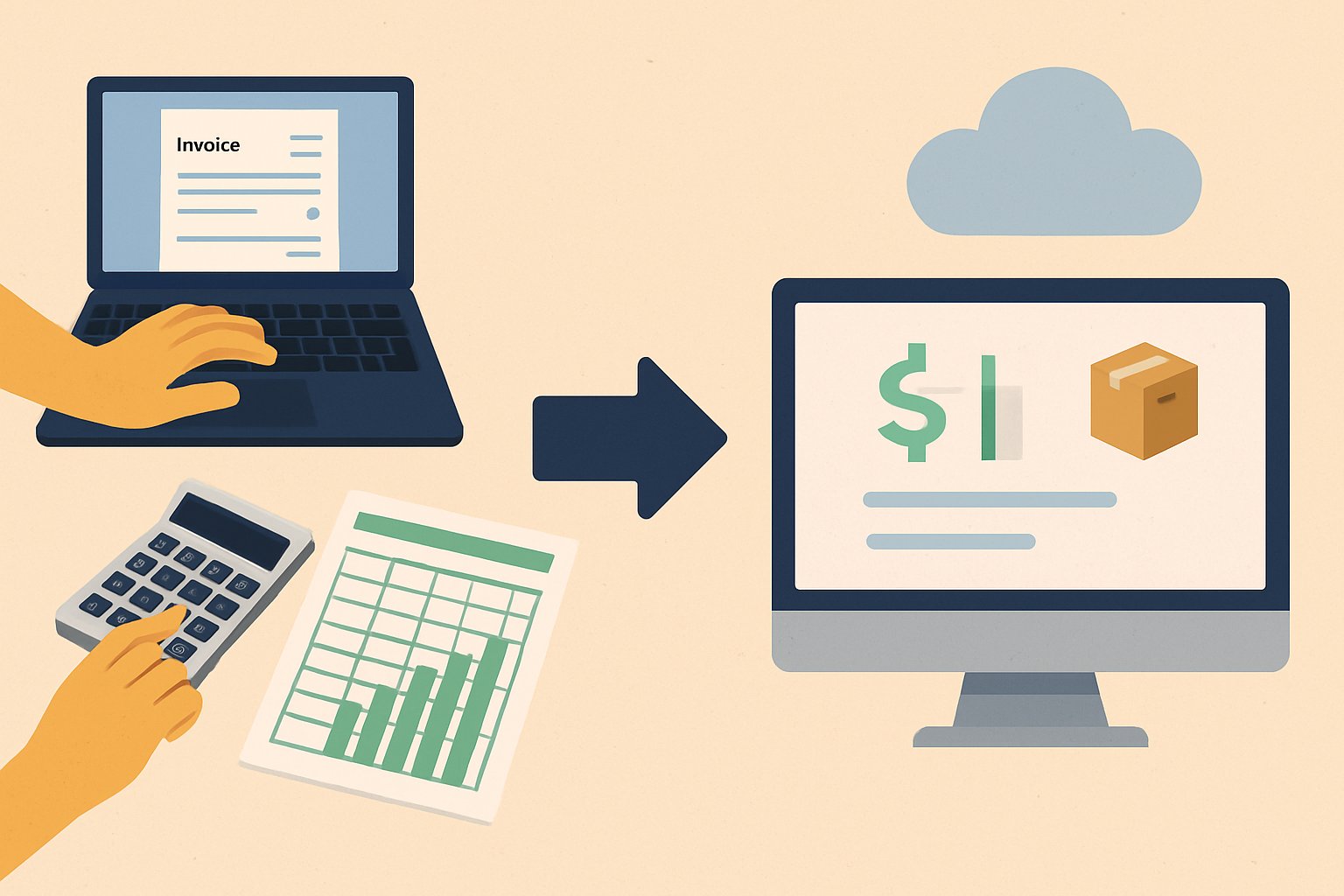
Invoicing in one system and tracking stock in Excel means doing the work twice. This is how a business changes when everything lives in one place.